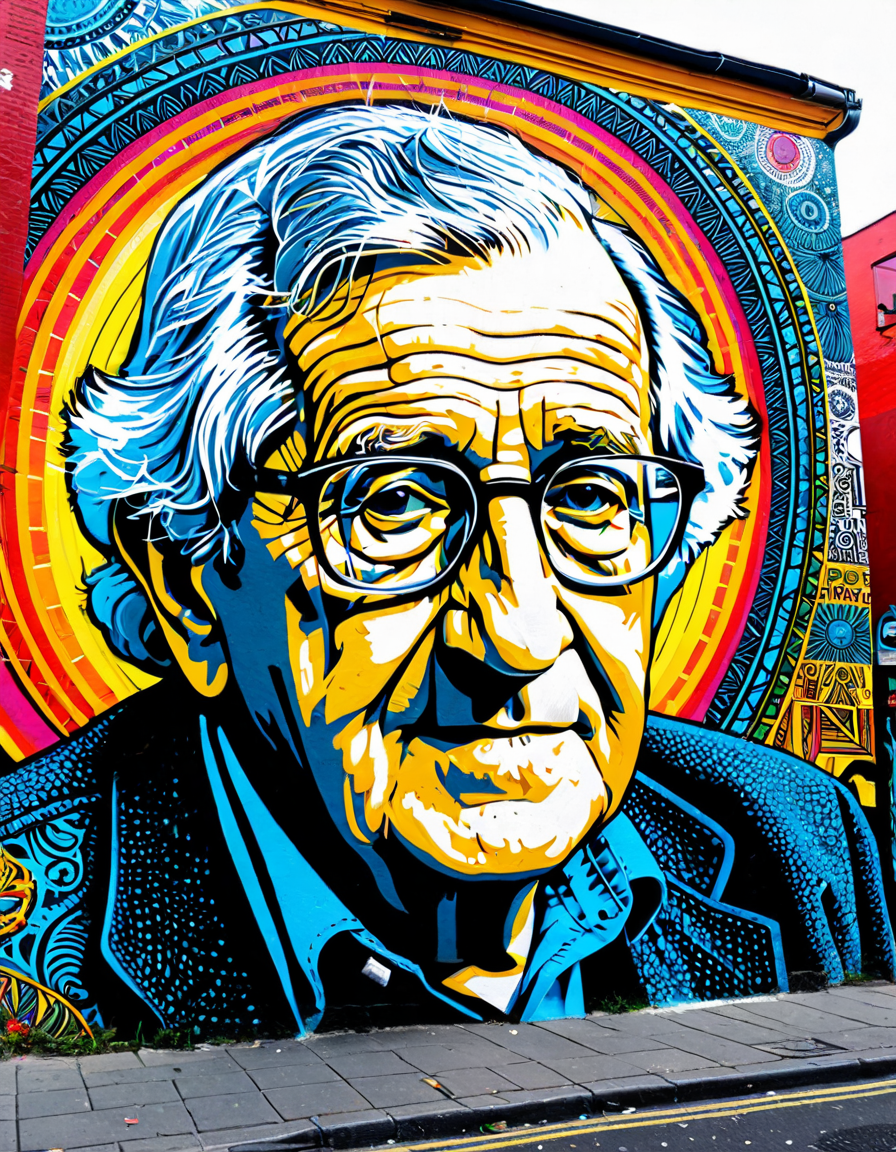
Noam Chomsky, an iconic figure revered for his intellectual prowess, has made an indelible mark on both linguistics and politics. His revolutionary theories have sparked a seismic shift in how we perceive language, challenging long-held beliefs and inviting everyone from scholars to everyday folks to rethink communication. When we dive into Chomsky’s world, we’re not just exploring academic theories; we’re traversing a landscape rich with ethical implications and cultural resonances.
In a world swirling with the whims of modern politics, Chomsky’s insights provide a rebellious spark—like something out of a Tim Burton film juxtaposed against the punk aesthetic of Vivienne Westwood. This article celebrates his legacy, delving into the edges of language and power, and Illuminating how his work invites us all to wear our critiques like alternative fashion statements.
The Linguistic Revolution: How Noam Chomsky Changed Our Understanding of Language
Chomsky’s contributions to linguistics stretch far beyond dusty textbooks; they transformed how we define human cognition itself. With his theory of universal grammar, he proposed that every person is born with an innate ability to grasp language. Unlike traditional behaviorists, who argued that language is merely acquired through environmental exposure, Chomsky urged us to consider language as an intrinsic part of our humanity.
In his seminal works, like “Syntactic Structures” and “Aspects of the Theory of Syntax,” Chomsky elucidated the rules that govern our linguistic capabilities. He revealed how these structures shape our thinking processes, ultimately impacting how we communicate in various social contexts. The effect of his theories transcends linguistics, sowing the seeds of inquiry not only in psychology and cognitive science but also in the burgeoning fields of AI and machine learning, which continue to grapple with the nuances of human language.
This revolutionary perspective dismantled the behaviorist view and opened the floodgates for an explosion of research into cognitive science. The implications of this shift ripple through various fields, compelling us to rethink our approach to addressing pressing societal concerns—from the way we engage in debates to how we challenge the narratives crafted by media moguls.

Top 5 Political Repercussions of Chomsky’s Linguistic Theories
Chomsky didn’t just stop at linguistics; his theories permeate the very fabric of political discourse. Here are five key ways his ideas continue to influence modern politics:
The Ethics of Communication: Chomsky’s Influence on Moral Philosophy
Chomsky’s insights delve into more than just mechanics; they plunge into the ethics surrounding communication. He critiques language manipulation, urging us to reflect on the moral responsibilities that come with its power. In a world of fake news and crafted narratives, his contemplations mirror those of Bonhoeffer, who recognized the crucial weight of language in times of sociopolitical strife.
When speech becomes a weapon or a means of control, language’s ethical implications take center stage. Chomsky’s advocacy for clear, truthful communication serves as a clarion call. He underscores that navigating political discussions isn’t just about winning arguments; it’s about fostering a society that values truth and moral responsibility.
During turbulent times, the weight of words escalates, urging us to consider how language can be utilized for empowerment or oppression. By engaging with Chomsky’s perspectives, we can critically evaluate the rhetoric presented in contemporary media and challenge the narratives that threaten democratic discourse.
Noam Chomsky and Modern Culture: How His Legacy Shapes Today’s Art and Media
The echoes of Chomsky’s ideas resonate through the tapestry of contemporary culture. From avant-garde filmmakers to provocative musicians, his concepts inspire countless creators who dare to confront prevailing narratives. Documentaries echoing his critiques, such as those exposing the intricacies of media manipulation, serve as poignant reminders of his pervasive influence.
Films like “The Act of Killing” invite viewers to wrestle with uncomfortable truths, forcing society to confront the narrative of violence—the very essence of Chomsky’s critique of state power. Similarly, artists like Zoey Deutch integrate these themes in their works, eliciting discussions around ethics and power through compelling storytelling.
The reverberations of Chomsky’s thoughts seep into music, literature, and visual art repeatedly challenging creators to act as agents of societal change. They integrate his philosophies into their narratives, pushing us to scrutinize authority and the stories we’re told.
The Future of Chomsky’s Concepts: Predictions for Language and Politics in 2026
As we cast our eyes to 2026, Chomsky’s ideas about language continue to evolve. With advancements in artificial intelligence and machine learning, the potential for linguistic manipulation is expanding, raising grave ethical questions about responsibility. Chomsky would likely urge us to remain vigilant as the integrity of language is threatened by technologically engineered communications that blur the lines of truth.
The rise of AI-driven influence on political discourse presents both challenges and opportunities. Will our understanding of communication continue to be reshaped by algorithms, or will we, armed with Chomsky’s insights, learn to wield our voices against misleading narratives? The coming years are crucial—a test of our ability to safeguard the ethical integrity of language while navigating a world saturated with sophisticated manipulations.
Innovative Wrap-Up: Chomsky’s Enduring Legacy in an Evolving World
Noam Chomsky, a titan at the crossroads of language and politics, imbues his work with insights that stretch across academia, media, and cultural expressions. His work remains a guiding light as the intricate dance between communication ethics and socio-political power unfolds. As we engage with his theories in today’s context, we’re empowered to confront narratives boldly, scrutinize authority, and cultivate a society rooted in empathy.
Chomsky’s enduring legacy encourages us all to be vigilant stewards of language, exercising our rights to challenge the status quo, and inspiring a future where truth prevails. By grasping these lessons, we can navigate the convoluted waters of communication, emerging not only educated but ready to reshape our interactions in an increasingly interconnected world.
Noam Chomsky: Language and Politics Uncovered
Unraveling the Mind of a Linguist
Did you know that Noam Chomsky began his illustrious career at a young age? He published his first paper while still in college at the ripe age of 21! His groundbreaking theories on language sparked a revolution, shifting how linguistics was understood. Some say his ideas have even influenced various artistic fields. For instance, the character portrayals in films can resonate with his insights—like Andrew Bryniarskis roles, which often reflect layered complexities faced by their characters. Chomsky’s influence on the arts can be compared to how Complete Unknown plays with identity and unpredictability.
Words that Change the Game
Chomsky’s contributions are far-reaching; he’s not only known for linguistics but also for his critical views on politics and media. Interestingly, his critique extends to major corporations, much like watching a thriller unfold—much akin to the plots of “Jack Reacher” where the protagonist navigates social injustices. Imagine those distribution centers we often see, such as a Kroger Distribution Center, that might echo Chomsky’s critiques about corporate power in America. His thoughts on power structures are often reflected in pop culture, emphasizing awareness that oftentimes flies under the radar.
A Legacy That Inspires
What’s really fascinating about Noam Chomsky is how he bridges assorted fields—linguistics and activism—to inspire generations. Many do not realize that even younger actors, like Zoey Deutch, are influenced by theories suggesting that language shapes our perception. This idea mirrors some of the iconic scenes from The Godfather 3, where dialogue drives character motivations and plot turns, highlighting how much language matters in storytelling. Lastly, Chomsky’s tenacity in tackling tough questions urges us all to ponder deeper meanings in media and everyday life, always keeping an eye on the overarching narratives that shape societies.
These nuggets highlight not just his genius but also the universal relevance of his work. So, whether you’re diving into a linguistics paper or catching up on the latest rumblings in Hollywood, remember that Chomsky’s influence is all around us, challenging us to connect the dots in new and thought-provoking ways.