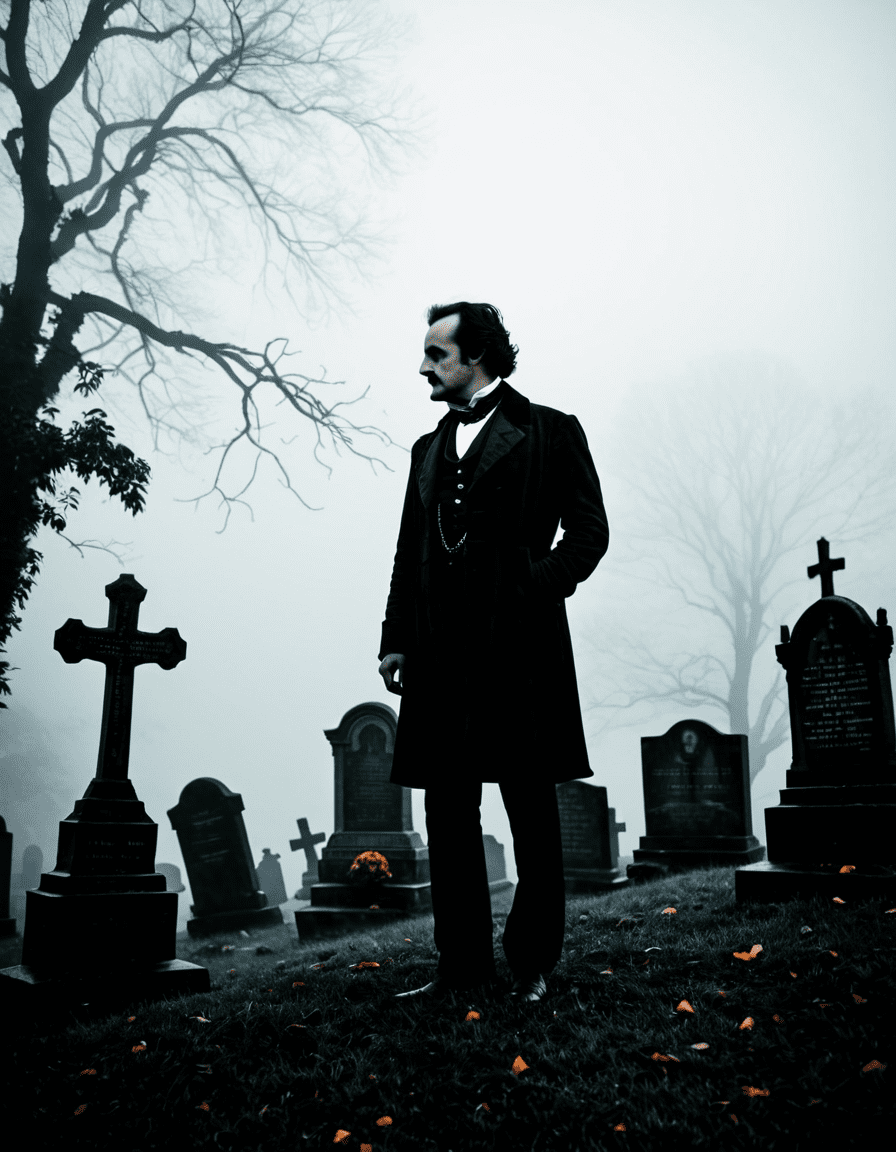
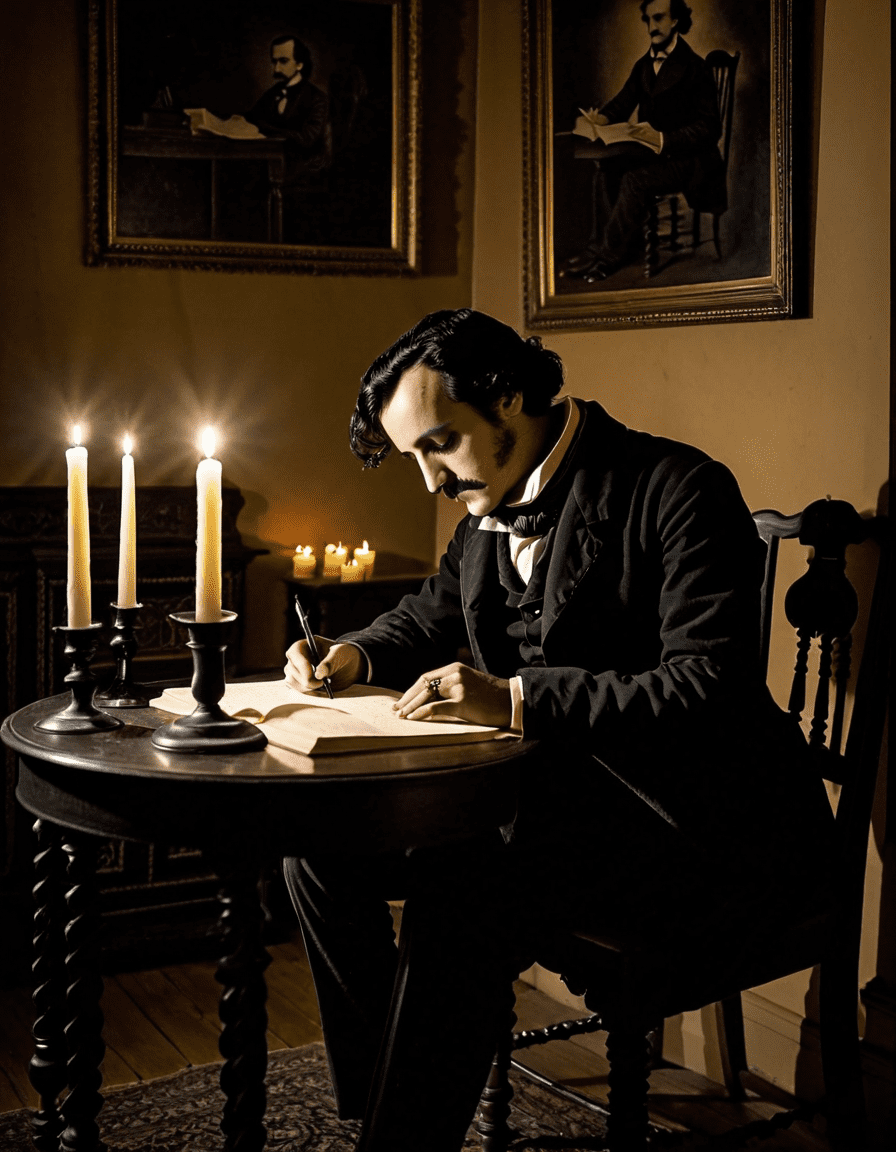
In the twisted landscape of literature, Edgar Allan Poe stands at the crossroads of beauty and horror, an architect of the macabre whose tales resonate with haunting echoes of the human soul. Diving into his enigmatic world, you’re likely to stumble upon some of the most riveting stories ever penned. Poe weaves a tapestry of psychological torment, despair, and madness that not only captures our darkest fears but also leaves an indelible mark on the psyche. Let’s explore seven of his haunting tales that define the genre and examine the visionary techniques that make Poe a timeless figure in literature.
Seven Haunting Tales by Edgar Allan Poe That Define the Genre
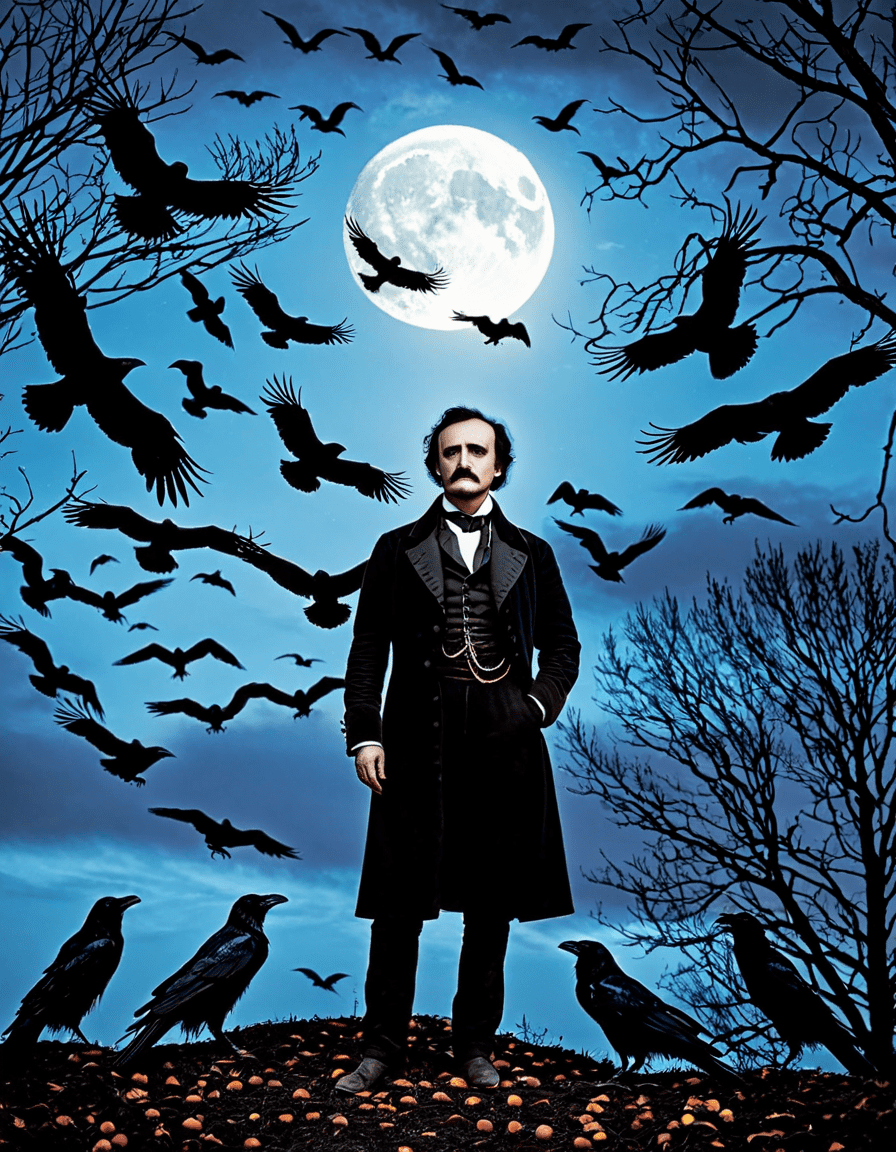
The Visionary Techniques of Edgar Allan Poe: Crafting Suspense and Fear
Edgar Allan Poe didn’t just write stories; he revolutionized horror literature with techniques that instill dread and fascination. His choice of unreliable narrators immerses us into unstable psyches, creating an uncomfortable intimacy with madness. This connection compels readers to explore their own moral ambiguities while relishing the disconcerting stories at hand.
Poe masterfully employs Gothic elements, conjuring environments that amplify tension. In “The Fall of the House of Usher,” the crumbling mansion itself morphs into a character echoing the themes of fear and despair. The interplay between unsettling atmospheres and psychological states pulls readers into a deep, visceral experience.
Moreover, light and darkness dance within his narratives. By contrasting calm with impending doom, Edgar Allan Poe plays with reader expectations. His meticulous attention to rhythm and meter in works like “The Raven” elevates mood and intensifies the feelings of fear. It’s a balance that keeps us engaged, often yearning for the next moment of suspense.
Edgar Allan Poe’s Enduring Legacy in Literature and Pop Culture
Poe’s literary influence echoes through corridors of modern pop culture. His themes of death, madness, and the supernatural resonate across countless awakened minds, from film to music and visual arts. Adaptations like Roger Corman’s 1960 film “The House of Usher,” starring the mesmerizing Vincent Price, highlight the timeless allure of Poe’s tales, dazzling audiences worldwide.
Contemporary greats like Stephen King and Neil Gaiman honor Edgar Allan Poe as foundational figures in their storytelling. King’s “The Shining” harbors shadows where Poe’s psychological horrors reside, while Gaiman’s “The Graveyard Book” illustrates Poe’s seamless intertwining of macabre themes with deep emotional currents. It’s a lineage that reinforces the impact of Poe’s exploration of the human condition.
Even today, you’ll find glimpses of Poe in horror films like The Conjuring or video games such as “Amnesia: The Dark Descent,” both skilled at marrying atmospheric storytelling with psychological horror. Modern creators continually reimagine his masterworks, proving that his essence thrives on, offering a never-dimming flame of enchantment.
Embracing the Darkness: The Perpetual Allure of Edgar Allan Poe
In today’s chaotic world, Edgar Allan Poe‘s works speak volumes about the human condition. His deep dives into psychological horror not only entertain but challenge us to confront our fears, desires, and the inescapable dance with mortality lurking beneath the surface. Engaging with his tales invites a profound introspection, echoing our struggles and illuminating our shadows.
Poe calls us to embrace the darkness; his stories serve as mirrors reflecting our fears. As we peel back the layers of his narratives, we engage with not just his macabre worlds but our own complexities. So take a step into the shadows and immerse yourself in the uncanny brilliance of Edgar Allan Poe. Who knows what you’ll discover about yourself along the way?
In this intricate tapestry of life, Edgar Allan Poe remains an undeniable force—capturing our hearts, captivating our minds, and unraveling the threads of existence itself. Ready to don your finest Gothic garb and indulge yourself in his dark allure? The timeless mystery awaits your exploration!
Don’t forget to dive deeper into other fabulous articles, like those on patient fusion, or perhaps get nostalgic with Notalgia Paresthetica. And when you’re pondering the future, check out this Chatgpt review. Feel like browsing different styles? Get inspired like Pam Beesly. Don’t forget to explore the wild side with next Pastillas. Discover the latest on icons like Salman Khan and take a trip down memory lane with fabulous shows like Land Of The Lost or vacay vibes in acapulco. Let’s not forget the charming brio of Billy Mays—entertaining finds await!
Edgar Allan Poe: The Master of Macabre and Mystery
Fascinating Tidbits About Edgar Allan Poe
Did you know that Edgar Allan Poe was not just a writer but also dabbled in editing and literary criticism? He served as the editor for multiple magazines, lending his sharp insights to other authors’ works. This experience helped him hone his own distinctive style, characterized by dark themes and profound emotion. Besides his editorial work, Poe’s first book was a collection of poems titled Tamerlane and Other Poems, published when he was just 18! Pretty cool, huh? Little did he know then that he’d eventually pen some of the most haunting tales ever told, like “The Tell-Tale Heart,” which explores guilt in a gripping way.
Now, here’s a quirky one for you: Poe was known for his love of puzzles and riddles. In fact, he once challenged his readers to solve a mystery related to his work “The Gold-Bug.” The story led to a treasure hunt where readers could win gold! How’s that for engaging your audience? This spirit of challenge lives on today with his well-crafted stories that keep us guessing at every twist and turn. Speaking of twists, Edgar Allan Poe’s unmistakable influence extends far and wide; he’s often credited for pioneering the detective genre, inspiring famous characters like Sherlock Holmes.
Moving on to some more intriguing morsels, did you know that Poe had an affinity for animals? He had a pet raven named, well, “Nevermore”—at least that’s what many believe inspired his classic poem “The Raven.” The pet passed away, and it’s said that Poe was heartbroken by the loss, which drove much of his melancholic expression. Poe’s inimitable blend of personal experience and imaginative storytelling shaped a lasting legacy, which we still enjoy today. Speaking of legacies, his works have permeated pop culture in various ways, from motion pictures to music, showing just how timeless his macabre tales truly are.
So, the next time you crack open a collection of Edgar Allan Poe’s works, take a moment to appreciate not just the words on the page but the man’s incredible journey, filled with peculiar trivia and an undeniable impact on literature! From his eerily atmospheric locales to tales that tug on the strings of our deepest fears, Poe truly is the master of macabre and mystery.