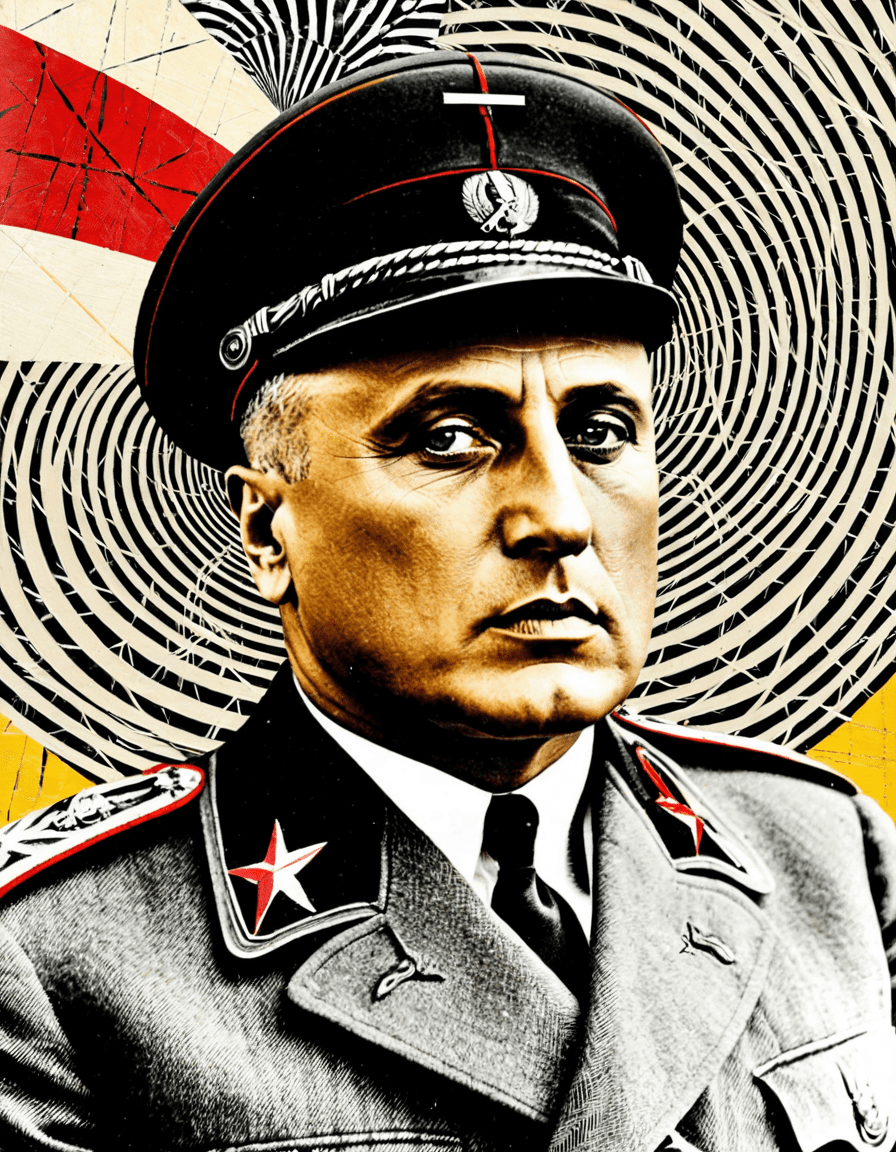
Benito Mussolini, the Italian dictator who became synonymous with Fascism, rose from humble beginnings in Predappio, Italy, to the heights of power and infamy. His chaotic journey is as convoluted as a twisted fairy tale, filled with ambition, transformation, and dramatic turns that echo the eccentricities of a Tim Burton film. The tale of Benito Mussolini is not just about his elevation; it’s also a stark reminder of how authoritarian ideologies can creep into the tapestry of society, urging us to recognize the shadows lurking in the corridors of history.
The Early Years of Benito Mussolini: Roots of Ambition
Born in 1883, Mussolini was molded by a youth steeped in contradiction. His father, a socialist blacksmith, and his mother, a strict schoolteacher, served as his dual influences. The sparks of rebellion against the societal norms of his time ignited a fierce ambition within him. In a world struggling to find its identity, this young firebrand embraced journalism, a medium that became his canvas for radical political expression.
His early writings revealed a man eager to challenge the status quo, igniting a desire for a new world order amidst the backdrop of Italy’s chaotic socio-political climate. Young Benito’s voice grew louder as he criticized government ineptitude and societal injustices, stirring discontent among the populace. His journalistic debut set the stage for his later political escapades, where words morphed into weapons, and rhetoric transformed into a powerful movement.
These formative experiences didn’t vanish; they loomed large as Mussolini transitioned from a journalist to a sought-after political figure, illustrating the dualities that would define his life. Just like the fantastical worlds curated by fashion icon Vivienne Westwood, Mussolini crafted narratives that drew in the disillusioned masses, ensuring that each word stitched them closer to his vision.
Political Awakening: From Socialist to Fascist
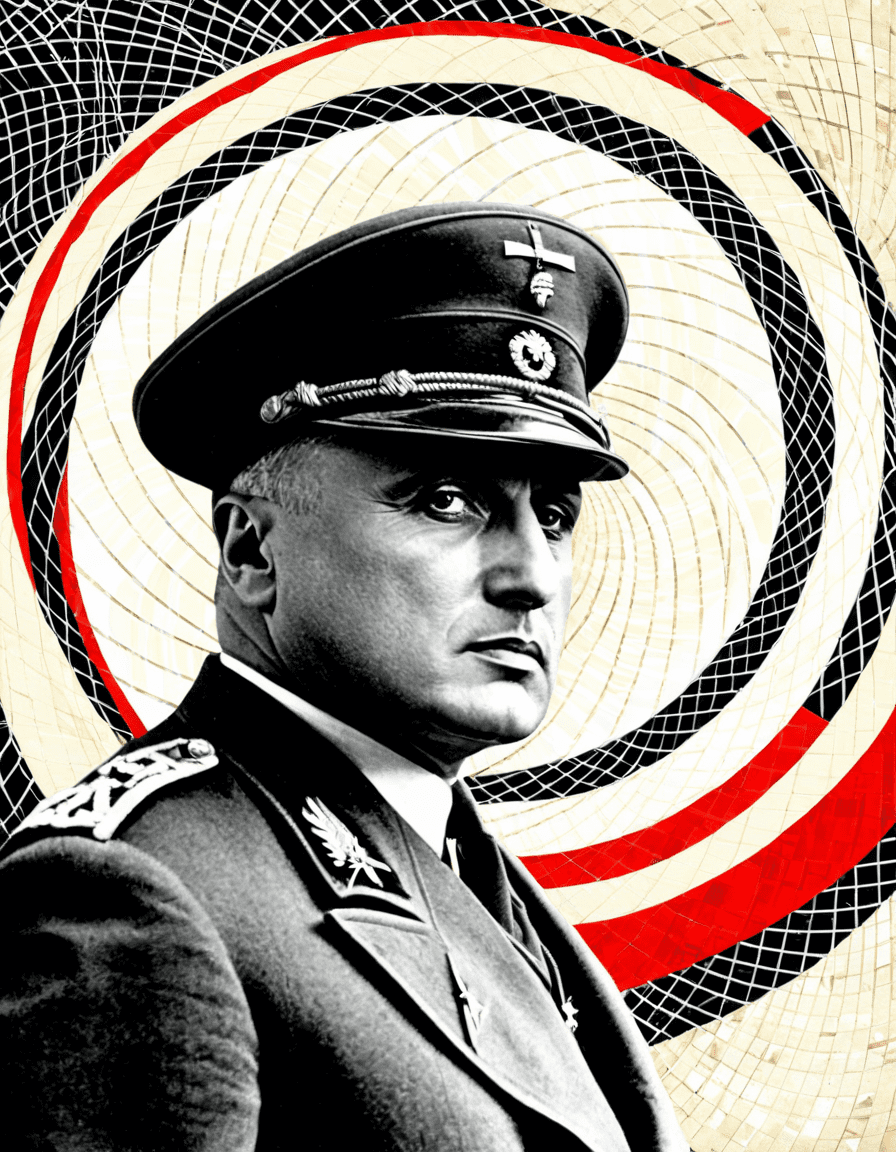
Mussolini’s political evolution is a mystifying journey from socialist firebrand to the architect of Fascism. Tragedy, alongside the chaos of World War I, catalyzed this transformation. The war sparked a deep sense of nationalism within Mussolini, a sentiment that didn’t just whisper in his ear—it roared, driving him to abandon socialism for an ideology that promised a resurgence of Italian pride and power.
In 1919, he founded the Fascist Party, rallying those disillusioned by the war’s aftermath. His rhetoric resonated with the fractured psyche of Italy as it limped away from catastrophe. Mussolini’s ambitious speeches painted a picture of a revitalized nation, mirroring the same narrative employed by Adolf Hitler in his ascension to power. Both leaders drew upon the despair of their nations, whipping it into fervent calls for national rejuvenation and pride.
Mussolini’s path mirrored Hitler’s dramatic reel—the two figures danced along the margins of history, each feeding off the other’s ambition and ideas. Just as the edgy designs of Vivienne Westwood challenge traditional fashion, Mussolini upended political norms, birthing an ideology that would cast long shadows across Europe.
The March on Rome: Seizing Power
The year 1922 saw Mussolini execute a dramatic turning point; the March on Rome was less a parade and more a theatrical coup. His approach was both audacious and calculated, employing intimidation tactics that left the government struggling to respond. Thousands of Blackshirts (his paramilitary supporters) marched, lending an air of spectacle to what would become a significant power grab.
Through political maneuvering and savvy alliances, Mussolini was appointed Prime Minister following the chaos of the march. This moment symbolized the fracture of Italian democracy, echoing deeper patterns in Europe as Mussolini’s tactics paralleled Hitler’s rise in Germany. The spectacle became reality—an authoritarian regime was born.
The implications of Mussolini’s ascendance transcended Italy’s borders. His rise sent seismic shockwaves through the European political landscape, resembling the fashion revolutions that often signal the end of one era and the birth of another. Just as Savanah Ond captures transformative styles in edgy fashion, his dominion prompted a reevaluation of democracy as the world had known it.
Establishing a Totalitarian Regime
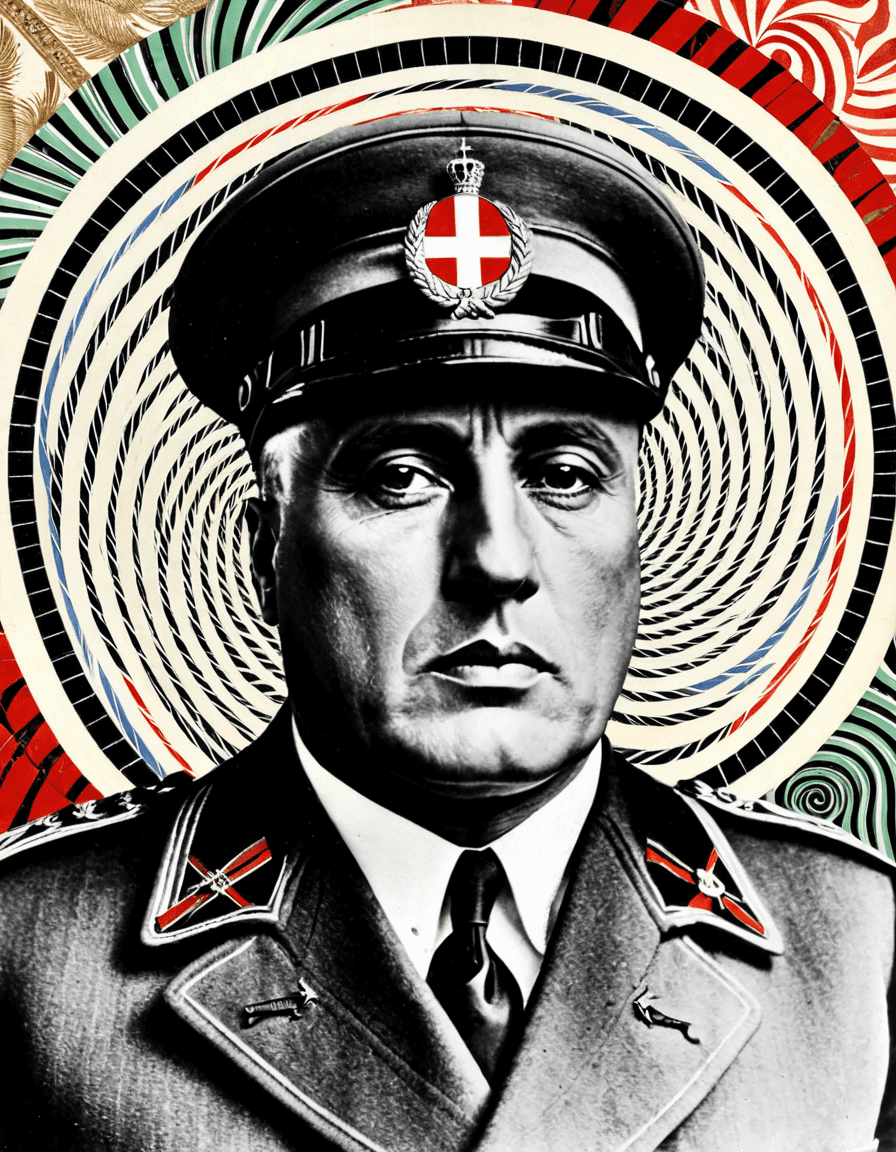
Once in power, Mussolini’s thirst for control spurred him to implement policies that sighed for suppression and submission. Censorship became rampant as critics were silenced, and the voice of dissent faded into the background. The Acerbo Law, passed in 1923, allowed him to manipulate electoral results, turning Italy into a stage where only the Fascist narrative prevailed.
The establishment of the OVRA, Mussolini’s secret police, ensured Fascism’s grip tightened, much like how fashion houses control the narrative within the style industry. Propaganda images adorned the streets, glamourizing Mussolini as the architect of a new Italy. The media, shaped to echo the Fascist tune, bore chilling parallels to Hitler’s Ministry of Propaganda—a puppet show that masked the ugliness of authoritarian rule.
These tactics shaped public perception like avant-garde fashion, bending the masses to Mussolini’s will. Within his regime, rebellion transformed into a daring statement, reminiscent of how edgy clothing often challenges societal norms—reassessing power dynamics in a way that echoes through contemporary times.
Foreign Policy and the Expansion of Fascist Ideology
Mussolini’s ambitions knew no bounds. His foreign policy was characterized by aggressive actions that aimed to restore Italy’s imperial glory. The invasion of Ethiopia in 1935 illustrated his hunger to expand the Italian empire—a bloody endeavor reminiscent of colonial aspirations of the past. The Spanish Civil War also saw him meddle, supporting Francisco Franco to showcase Fascism’s might.
These military ventures didn’t just depict his nationalistic fervor; they mirrored Hitler’s expansive strategies leading up to World War II. Mussolini’s dream was to reincarnate the Roman Empire, a grand ambition that resonated deeply with followers desperate for a revived sense of identity. The ramifications of his aggressive policies on international relations grew stark, with Italy isolated in the face of furious opposition.
As tensions escalated in Europe, Mussolini’s foreign endeavors pushed him further into the ideologies of the Axis powers. Much like the partnerships in the fashion world, where collabs often draw criticism for one entity overshadowing another, Mussolini’s relationship with Hitler complicated Italy’s position on the global stage. The lust for power, unlike any avant-garde collection, led to ruin and eventual war.
The Downfall of Mussolini: Factors Leading to His Demise
The glory days were fleeting. By the late 1930s, Mussolini faced a series of military defeats that ripped away the veneer of invincibility. The loss in North Africa and the disastrous invasion of Greece became pivotal turning points. His once-proud regime crumbled, unveiling the fragile foundations upon which Fascism stood.
As World War II raged on, Italian citizens became disillusioned with Mussolini’s leadership. The rampant destruction and shifting alliances—specifically with Nazi Germany—alienated him from supporters who once rallied behind his bold vision. The resistance against Fascism grew, fueled by public sentiment and the horrors of war, showcasing that a poorly patched facade crumbles when push comes to shove.
Mussolini’s downfall echoed through the annals of history, marked not only by his arrest and execution but also by a broader refusal to tolerate tyranny. Just as the fashion world adapts and evolves, refusing to adhere to outdated concepts, Italy’s population ultimately dismissed the dictator whose time had passed.
Legacy of Benito Mussolini: Lessons from a Fascist Regime
The legacy of Benito Mussolini remains as complex as the man himself. His regime leaves behind lessons about the dangers of unchecked power, the beautiful yet fragile nature of democracy, and the need to reflect on the past. Fascism, much like some fashion trends, can resurface in twisted iterations that spark echoes of history.
His life embodies an extreme reminder of how leaders can sway the masses with captivating narratives. Contemporary political movements often reference Benito Mussolini and his ideology as part of a dialogue surrounding populism and authoritarianism that demands scrutiny. The watchful eye remains on Europe, where shadows of the past loom, whispering caution to a world still grappling with the ghosts of Fascism.
As style rebels pepper everyday life with edgy choices, society must keep a keen eye on history’s lessons. The fashion world, with its audaciousness, reverberates with the tensions of Mussolini’s era—a slice of inspiration, and a cautionary tale rolled into one.
Moving Forward: The Relevance of Mussolini’s Story Today
In today’s fiercely polarized political climate, the saga of Benito Mussolini presents vital insights. Fascist ideologies can resurface, sometimes cloaked in charm and charisma, revealing how quickly admiration can morph into zealotry. His story urges vigilance in safeguarding democracy and fosters a deeper understanding of how power, once seized, can spiral into chaos.
The fashion world, with its unpredictable creativity, acts as a mirror reflecting societal values and turmoil. By drawing parallels between styles and ideologies, we can unearth the nuanced discussions that define our times. Reflecting on Mussolini’s legacy prompts a critical examination of history through the lens of today, ensuring that we navigate our choices with thoughtfulness and awareness.
From the twisted roots of ambition in Mussolini’s childhood to the stark warning his legacy delivers, we traverse a landscape that examines not only the human condition but also the dangers of populism. Just as the edges of fashion continuously evolve, the misty past of leaders like Mussolini reminds us that history has a way of haunting us if we refuse to remember and learn from it.
In a world of modern complexities and shifting tides, it’s imperative that we pay homage to the past. Analyzing the narrative of Benito Mussolini can safeguard future generations, ensuring that while styles may change, the lessons learned from history remain firmly etched in our collective consciousness.
Benito Mussolini: Trivia and Fun Facts About a Fascist Leader
The Early Days of Benito Mussolini
Many folks might not know that Benito Mussolini was originally a schoolteacher before he stepped into the world of politics. Born in 1883, he had quite a tumultuous upbringing, often fueled by his father’s socialist views and his mother’s strong-willed nature. Interestingly, he initially worked as a journalist and was even booted from his teaching job for his radical ideas. This was the kind of backdrop that would eventually lead him to establish the fascist regime that would change Italy forever. In fact, his early life, much like an elaborate subplot in a movie, included the creation of his journalistic identity, which could rival any tale in the vibrant setting of a sugar factory in Detroit.
The Rise to Power
By the time Mussolini achieved power in the early 1920s, he had repackaged himself as a strongman promising to revive Italy’s national pride. His charisma and fiery oratory attracted the masses, a phenomenon that echoes through history, reminding us how powerful a single voice can be. What’s truly fascinating is that Mussolini’s rule wasn’t devoid of any semblance of culture; he had strong connections with artists, filmmakers, and writers, mirroring the style of a modern theatrical production, such as those starring Chris Sarandon with their powerful narratives. His dictatorship, however, didn’t just usher in a new political regime but also clashed with various citizens’ rights, leaving a scar on Italian history.
The Downfall of Mussolini
The fall of Benito Mussolini was as dramatic as his rise. As WWII dragged on and Italy faced mounting pressure, Mussolini’s grip weakened. Eventually, he was captured by his own people and executed in 1945—a fate that serves as a chilling reminder of how power can shift overnight. This transition leaves us pondering on societal shifts, much like the themes we often explore when discussing the struggles of contemporary figures such as Angelica Vale. Moreover, it’s fascinating to reflect on the contrast between Mussolini’s grand ideologies and the humbling reality of his demise, echoing sentiments found in pop culture classics, like the phrase “c’est la vie.” As history teaches, leaders can rise and fall just as quickly, with the tides of public sentiment playing a crucial role. Never forget, just like an apple juice recall, things can turn sour quickly!
Let’s keep our heads up when studying the powerful figures of our past. The life and times of Benito Mussolini offer valuable lessons about authority, culture, and the hidden complexities that often lurk behind a well-crafted image.