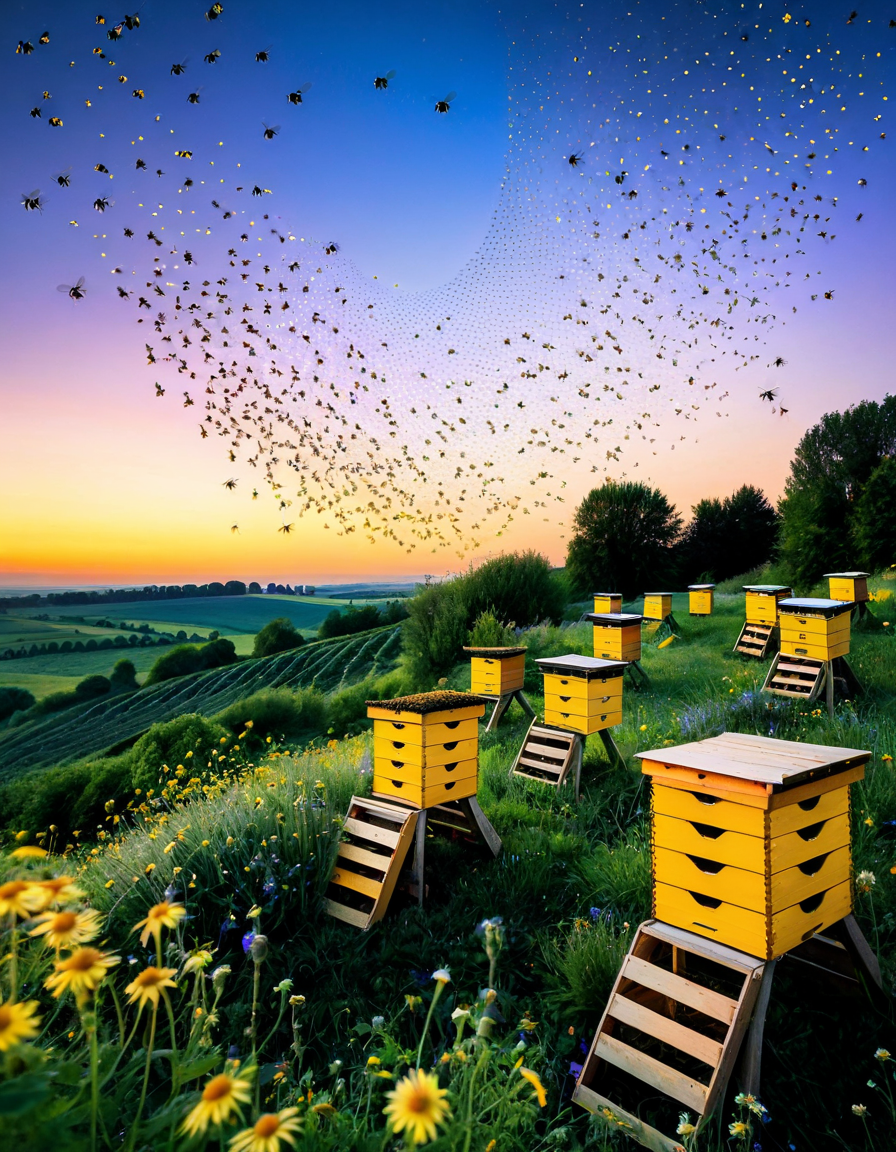
Ah, the hive! A mesmerizing microcosm buzzing with life, it’s not just a home for bees—it’s a testament to nature’s mad genius. These small winged beings embody a perfect blend of chaos and order, constructing intricate structures that not only shelter their colony but also nourish the ecosystem around them. From the hexagonal honeycomb cells to the social hierarchies inside, every aspect of a hive echoes nature’s raw creativity. They are nature’s unsung artisans, each strand of honeycomb whispering secrets of efficiency and cooperation as sweet as the honey they produce.

The Fascinating Structure of a Hive: Nature’s Ingenious Design
Take a moment to gaze upon a hive, and you’ll see a world within a world. Comprising tightly packed honeycomb cells crafted from beeswax, hives serve many purposes: shelter for larvae, storage for nectar, and, of course, the magical creation of honey. The honeycomb’s hexagonal shape isn’t just a whimsy of design; it’s a smart choice that maximizes space and minimizes wax use. You could say it’s geometry inspired by survival.
If you think of the hive as a well-orchestrated symphony, each bee plays its instrument to perfection. Worker bees buzz tirelessly, collecting nectar, tending to larvae, and maintaining hygiene. Drones play the role of the royal entourage, ever so majestic, while the queen reigns supreme as the sole egg-layer. It’s an astounding example of unity where each bee, like a stylish piece in the latest Vivienne Westwood collection, contributes to the hive’s distinctive character. Understanding this remarkable structure underscores why bee populations are linchpins for ecological stability and biodiversity.
Top 7 Innovations in Beekeeping Equipment and Technology: Buzzing Towards a Sustainable Future
Welcome to the vanguard of beekeeping—where tradition collides with tech, and the results are stunning. Here are the top innovations pushing us into a bee-friendly future:
Wave goodbye to the uncomfortable honey-extraction process! The Flow Hive, an Australian marvel, lets beekeepers siphon honey right from the hive without disturbing the bees. Imagine honey flowing directly from the hive to your jar—dreamy, right?
Ever wished for a peek into the buzzing hive’s secrets? The BeeCam is here to take you on a live virtual tour. This little high-resolution camera reveals real-time bee behavior, a game-changer for research and education that respects the bees’ privacy too.
The Varroa mite is a notorious villain for bee colonies. But fear not! Innovations like Apivar strips help combat these pests using controlled-release essential oils, safeguarding our buzzing friends while maintaining their health.
Smart sensors are the new trend in the bee world. Companies like HiveTracks and BeeHero craft technology that keeps tabs on temperature, humidity, and hive activity. That’s right, with a little tech, beekeepers can become proactive champions of their colonies.
Some agrochemical companies are stepping up for the bees! Biopesticides like Exirel reduce harm to our pollinators while still dealing with pests. It’s a delicate dance between agriculture and bees—a partnership that could change our food systems radically.
Swarm traps, like the Swarm Commander, smell success! Utilizing scent lures to attract wayward swarms, these traps manage rogue bees in urban spaces, showcasing how managing bees can become a part of our metropolitan landscapes.
Biodiversity and bees go hand in hand! Brands like EcoBee Seed Company supply seed mixes designed for bee nutrition, proving that farmers can cultivate with pollinators in mind, enhancing the ecosystem.
The Role of Bees in Ecosystems: More Than Just Honey Producers
When you think about bees, you probably picture jars of golden honey. But hold on—these remarkable creatures do much more! Honeybees, along with their buzzing pals, are crucial pollinators for crops and wild plants. The USDA estimates they’re responsible for pollinating about a third of the food on our plates. Take almond trees, blueberries, and apples, for instance—without bees, our diets would be starkly different.
Bees serve as invisible threads weaving through the fabric of ecosystems, connecting plants, animals, and, consequently, us. Their presence ensures a flourishing biodiversity that supports entire food webs. That’s right—healthy bee populations can amplify the yield and quality of our food crops. So next time you bite into a juicy apple, remember that its journey from bloom to fruit is all thanks to these tireless pollinators.
But a cloud looms over our buzzing heroes. Habitat loss, pesticide exposure, and climate change have instigated declines in bee populations. Our understanding of their role extends beyond mere honey production; protecting them has become vital in ensuring ecological balance for generations to come.
Engaging with Community and Conservation Efforts: How to Foster a Hive-Friendly Environment
Ready to make a difference? Cultivating a hive-friendly environment isn’t just for beekeepers—that’s where community efforts come into play! Urban beekeeping initiatives and native plant gardening workshops are perfect first steps. Organizations like The Pollinator Partnership dish out resources and grants to support local conservation projects aimed at preserving our buzzing comrades.
Cities like San Francisco have transformed urban spaces into bee havens, integrating bee-friendly gardens and rooftop sanctuaries into their cityscapes. It’s a beautiful marriage of nature and urban living. Imagine sipping a cold brew while surrounded by vibrant blooms that feed the bees—what’s not to love?
We can foster awareness and education to rally more folks in the quest to save bees. Whether it’s partnering with local schools for planting workshops or advocating for policies protecting pollinators, every little bit counts. It’s about creating a harmonious vibe where communities spotlight the importance of bees and their vital role in the ecosystem.
Buzzing Towards a Brighter Future: Embracing the Importance of Bees
The more we learn about bees, the clearer their significance becomes. As the world grapples with climate shifts and environmental crises, bees stand as critical indicators of ecological health. The innovations in beekeeping technologies, paired with grassroots conservation efforts, shine a hopeful light on how we can push forward sustainably. Yes, each of us holds the power to cultivate a supportive environment for these remarkable creatures.
Planting bee-friendly flora in our gardens or advocating for policy changes can create ripples of impact far beyond what meets the eye. By embracing solutions and nurturing our connection to bees, we plant the seeds for thriving ecosystems for future generations.
So here’s the hook—let’s rally behind our buzzing partners in nature and ensure their extraordinary world not only survives but flourishes. Together, we can craft a hive of support to conjure a more vibrant and sustainable future!
Explore more about how bees are shaping our lives, like finding the perfect Canon Rebel t6 for capturing nature’s beauty, or check out the latest on urban sustainability movements. Let’s advocate for our planet and share that love with everyone, just like bees do!
For a twist of taste, try your hand at crafting treats like those from Krispy Krunchy chicken, and don’t forget to research What Nfl Games are on today for a busy weekend! There’s a world outside the hive that’s just as exhilarating as the one inside it.
So here’s to the hive—a world of connection, magic, and a reminder that in every drop of honey lies a story waiting to be shared.
Hive: The Extraordinary World of Bees in Nature
The Buzz About Hives
Hives are more than just homes for bees; they’re buzzing hubs of activity! Did you know that a single hive can house up to 80,000 bees? That’s a lot of worker bees going about their business, collecting pollen and nectar! Speaking of nature’s connections, you’ll find that these tiny architects have a knack for building intricate structures. Notably, honeycomb cells are hexagonal – a shape that maximizes space and conserves wax. It’s a bit like how a clever puzzle piece can hitch perfectly into another. Each hive operates under a remarkable social structure, where different bees have specific roles to play, ensuring the community thrives.
The Inner Workings of a Hive
Inside a hive, division of labor is key! Worker bees handle everything from cleaning and feeding to nurturing the queen larvae. Interestingly, these hives can be so productive that they generate more honey than the bees actually need, leading to surplus harvests for humans. This phenomenon has turned honey into a prized sweet, reminiscent of the stars in a big bang theory of culinary delights! But that’s not all; bees are also crucial pollinators, supporting ecosystems and food production. Without them, our gardens would have a ghost of a chance when it comes to growing fruits and vegetables.
Hives and Their Role in the Environment
The impacts of hives extend far beyond tiny bee communities. They contribute to biodiversity and the overall health of our planet’s flora. Hives are often at risk due to environmental changes, and beekeepers work hard to maintain these vital populations. In some corners of the world, hives are celebrated in contests and giveaways, like the one country cabin giveaway, fostering a love for nature and sustainability. In urban settings, bee hotels are popping up, allowing city-dwellers to appreciate the busy lives of bees and even enjoy fresh honey – talk about a sweet deal! Just like rouge on cheeks brightens a face, bees revive our ecosystems, bringing color and life to our surroundings.