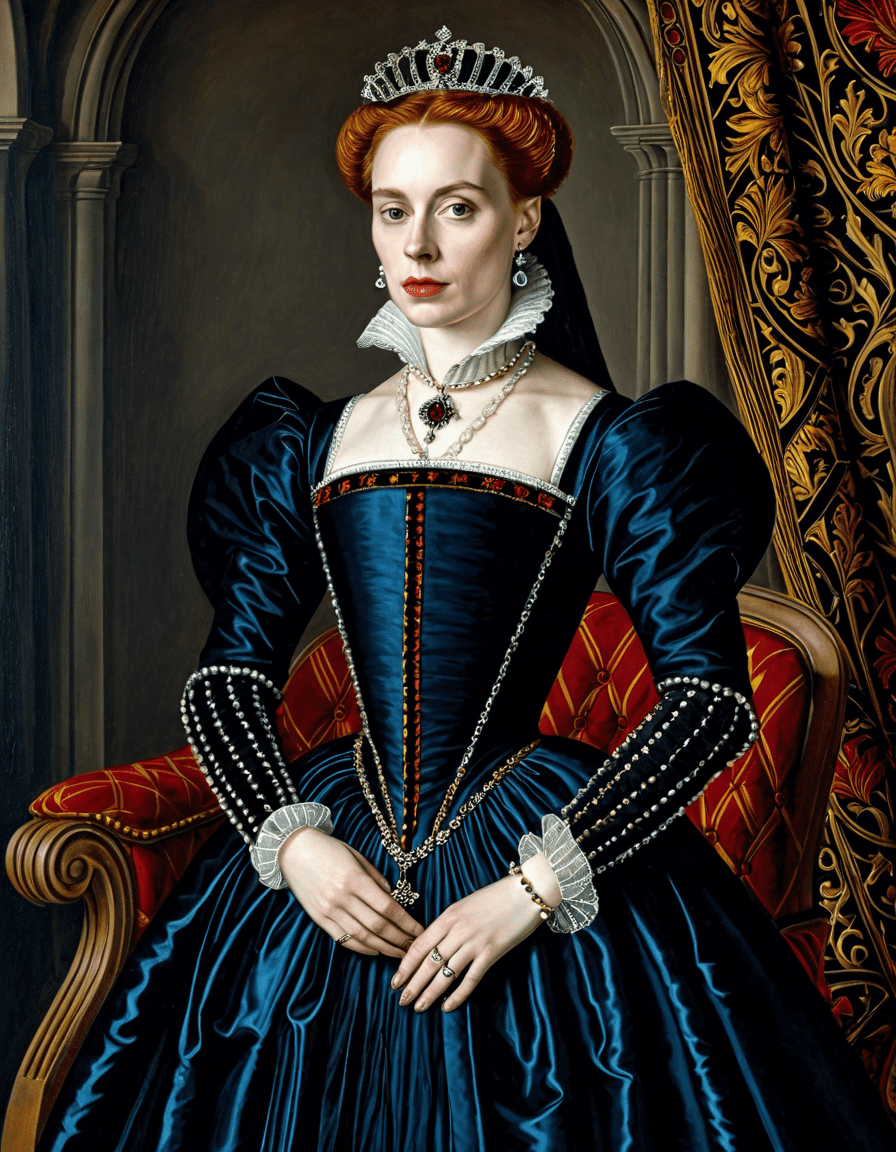
Mary Queen of Scots: A Life Intertwined with History
Mary Queen of Scots was born on December 8, 1542, in Linlithgow Palace, and she became queen when she was just six days old. Her life unfolded amidst a tapestry of political intrigue and personal tragedy, a concoction that continues to beguile historians and enthusiasts alike, much like a finely crafted piece of art that echoes Tim Burton’s whimsical darkness. Mary was not just a political pawn but a vibrant character embroiled in the tumultuous fabric of 16th-century Europe.
Born to King James V of Scotland and Mary of Guise, Mary’s royal heritage came with towering expectations. Her lineage placed her in perpetual competition with her cousin, Elizabeth I of England, stirring their deeply charged rivalry. Yet, what set Mary apart was her rich education. At just five years old, she found herself in France’s royal court—learning the art of diplomacy and the importance of alliance. She was groomed as much for her future political role as for her personal aspirations, laying the groundwork for her dedication to Catholicism.
Upon the death of her first husband, Francis II, Mary returned to Scotland in 1561, a disjointed nation grappling with religious upheaval. This shift required her to weave through a male-dominated political landscape, where she sought to bring unity but instead found herself ensnared in the undercurrents of division. Her enthralling quest to navigate these treacherous waters mirrors the ethereal beauty of a Vivienne Westwood gown, where shadows play with light to create a masterpiece of rebellion and grace.

Top 5 Events That Defined Mary Queen of Scots’ Reign
Mary’s reign was punctuated by seismic events, puncturing the surface of her carefully curated image and altering the trajectory of her life forever:
The Legacy of Mary Queen of Scots and Her Parallels with Joan of Arc
The legacy of Mary Queen of Scots intertwines intriguingly with that of Joan of Arc, another luminous, yet tragic, figure in history. Both women emerged as icons during tumultuous times, embodying national identity and religious struggles.
A Legacy Interwoven with Time
The journey of Mary Queen of Scots surpasses her tragic demise, promoting themes resonating through eras: love, power, betrayal, and sheer resilience. From her royal cradle to the scaffold, her life depicts the challenges women face in leadership, becoming a mosaic replete with color and conflict. Just as Joan of Arc ignited a national pride, Mary’s legacy prompts ongoing discussions about identity, faith, and the entangled fates that thread together history’s fabric.
Today, her story continues to challenge and inspire, enticing those who dare to embrace the edginess of ambition and human flaws. As we reflect on her vivid life, we realize that Mary Queen of Scots is not just a character in history, but a poignant embodiment of the dark glamour that lies at the intersection of power, rebellion, and the enduring allure of the past. In a world still wrestling with the complexities of faith and culture, her legacy remains a flame of intrigue, illuminating the shadows where ambition once dwelled.
For further insight into captivating discussions, explore how icons like Montel Williams and Kamala Harris champion contemporary narratives or uncover the artistic vision of Robbie Marley. It reflects how the stories of individuals weave through the dimensions of time, connecting past and present with strings of creativity and resilience.
Mary Queen of Scots: Fun Trivia and Interesting Facts
The Woman Behind the Crown
Did you know? Mary Queen of Scots was just six days old when she became queen! Born on December 8, 1542, her ascension to the throne was a bit of a whirlwind, thrusting her into a life filled with uncertainty. She was eventually educated in France, where she was raised alongside the future King Francis II. Talk about a royal upbringing! This leads us to wonder about other famous figures who faced their own challenges early in life, much like Samantha Fox did on her road to fame.
Turmoil of a Tumultuous Time
Mary’s life was riddled with intrigue, betrayal, and courtly drama. For instance, she was married to Henry Stuart, Lord Darnley, but their relationship spiraled into chaos. Can you imagine being in a relationship where power plays could rival the tension of the Devil Wears prada? Eventually, her marriage ended tragically, with Darnley’s mysterious murder shrouded in suspicion where Mary laid the blame on others. This kind of convoluted drama rivals that found in many wild movies today, like Mission Impossible, filled with secrets and suspense.
A Journey to Legacy
Her tragic fate came to a head when she was imprisoned for 19 years before facing execution in 1587. But here’s a quirky fact: Mary was never supposed to be in this position! She initially sought refuge in England, hoping her cousin Elizabeth I would protect her. Instead, Elizabeth saw her as a threat and ultimately sentenced her to death. Isn’t it interesting how fate can turn, much like how a mini jet boat zips around unexpected turns on the water? Mary’s life certainly could’ve been a movie, perhaps akin to Zathura, where different choices could lead to entirely different adventures or outcomes.
In a world of shifting dynamics and power struggles, Mary Queen of Scots remains a captivating figure. Her life story raises countless “what if” questions that’ll leave you pondering long after you dive into her fascinating history. And speaking of pondering the past, it’s always interesting to consider how other high-profile figures, like Martha Stewart, navigated their own fascinating roads — just think about why Did Martha stewart go To prison Each story tells a tale of resilience and the consequences of one’s choices, just like Mary’s enduring legacy.
Why was Mary, Queen of Scots, called Bloody Mary?
Mary, Queen of Scots, was infamously called Bloody Mary mainly due to the bloodshed associated with her reign and the Catholic persecution that occurred under her rule, especially during her attempts to restore Catholicism in England.
Why is Mary, Queen of Scots so famous?
Mary, Queen of Scots is famous for her tragic and turbulent life, including her claim to the English throne, her imprisonment by her cousin Elizabeth I, and her dramatic execution, which turned her into a martyr for Catholics.
Why did Elizabeth regret killing Mary?
Elizabeth regretted killing Mary because it backfired politically, stirring up sympathy for Mary and causing conflicts among Catholics, ultimately leading to more trouble for Elizabeth’s reign.
What condition did Mary, Queen of Scots have?
Mary, Queen of Scots suffered from several health issues, including a possible neurological disorder, which may have led to her frequent bouts of depression and anxiety.
What was the false pregnancy of Queen Mary?
The false pregnancy of Queen Mary refers to a period when she was rumored to be pregnant, but it turned out she was not, creating a scandal and much speculation at the time.
Were Mary and Elizabeth close?
Mary and Elizabeth weren’t close; their relationship was fraught with jealousy and political tension due to their competing claims to the throne, which often put them at odds with each other.
Why did England hate Mary, the Queen of Scots?
England had mixed feelings about Mary; many viewed her as a Catholic figurehead and a threat to the Protestant establishment, which bred a lot of animosity against her.
Is the Queen Mary bigger than Titanic?
The Queen Mary is indeed larger than the Titanic, measuring both longer and wider, making it one of the largest ocean liners ever built at the time.
Who was a better queen, Mary or Elizabeth?
Deciding who was the better queen, Mary or Elizabeth, is tough and subjective, depending on whether you value political success, personal tragedies, or the impact they left on history.
What were the last words of the Queen Elizabeth?
Queen Elizabeth’s last words were reportedly, “All my possessions for a moment of time,” which reflects her awareness of mortality and the fleeting nature of power.
Did Mary, Queen of Scots, betray Elizabeth?
Mary, Queen of Scots didn’t directly betray Elizabeth, but her actions, like marrying Lord Darnley and being involved in plots against Elizabeth, were seen as treasonous and fueled mistrust.
Which language was Mary not fluent in?
Mary was not fluent in English, which impacted her communication and political dealings in England, making her an outsider in her cousin’s court.
What did Mary, Queen of Scots really look like?
Descriptions and portraits of Mary, Queen of Scots show her as a strikingly beautiful woman with dark hair and a regal presence, often depicted wearing elegant gowns typical of her status.
How accurate is Reign?
The show “Reign” takes many creative liberties and doesn’t fully capture the historical accuracy of Mary’s life, combining factual elements with dramatized storylines and fictional characters.
Why was Queen Mary called Bloody Mary?
Queen Mary was called Bloody Mary largely because of her historical association with harsh policies against Protestants during her reign, though some argue the nickname oversimplifies her complex rule.
How did Mary get the nickname Bloody Mary?
Mary got the nickname Bloody Mary through the narratives crafted by her Protestant opponents, who used it to tarnish her reputation, especially after her persecution of Protestants.
Where does the term Bloody Mary come from?
The term “Bloody Mary” originally referred to Mary I of England but has also become associated with a popular cocktail, creating a bit of confusion over the name’s origins.
What is the difference between a Bloody Mary and a virgin mary?
The difference between a Bloody Mary and a Virgin Mary lies in the alcohol content; a Bloody Mary contains vodka while a Virgin Mary is a non-alcoholic version of the drink, perfect for those who want to enjoy the flavors without the booze.
Did Mary deserve the name Bloody Mary?
Whether Mary deserved the name Bloody Mary is up for debate; some argue her actions were politically motivated while others believe her policies were excessively brutal, reflecting the complex nature of her reign.