Shakespeare’s Othello stands as one of the most intricate tragic heroes, embodying a raw—and at times—haunting juxtaposition of love and betrayal. This tale of Othello unfolds in a world where deep emotions collide with insecurities, ultimately leading to the hero’s heartbreaking demise. As we peel back the layers of Othello’s character, we find a tapestry woven with devotion and jealousy, the foundations of his love for Desdemona shadowed by the insecurities of race and social standing. So, let’s embark on this twisted journey—much like an avant-garde runway show—where the dark edges of Othello’s psyche meet the vivid colors of his tragic love story.
Understanding Othello’s Complexity as a Tragic Hero
Othello’s character transcends the conventional mold of a tragic hero. He’s not just a warrior; he’s a lover with a heart as grand as his stature. His profound love for Desdemona is undermined by his vulnerabilities. As a Moor in Venice, societal prejudice gnaws at him, feeding his insecurities and transforming his noble spirit into a vessel for destruction. These flaws serve as a double-edged sword, amplifying his strengths—like passion and loyalty—while nurturing the seed of destructive jealousy.
When Iago, the puppet master of deceit, manipulates Othello, we watch this noble man spiral into a tempest of rage and regret. The layers of Othello’s identity become achingly complex; his devotion morphs into a lunacy that tears apart the fabric of love. Othello’s tragic flaw resides within this juxtaposition—love blurs into obsession, and trust falters under the weight of deceit. This capricious nature invites us to ponder: How often do our insecurities dictate our fate?
As we delve deeper, we glimpse Othello’s journey resembling a haunting ballet, where every pirouette leads him further down the rabbit hole of betrayal. He embodies the agony of countless souls stricken by betrayal, signaling that love can be both a sanctuary and a battleground. The tragic hero’s arc evokes not only sympathy but also a troubling reflection of human nature itself—it’s a dance between light and shadow, whispering the truth that we must confront in our hearts.
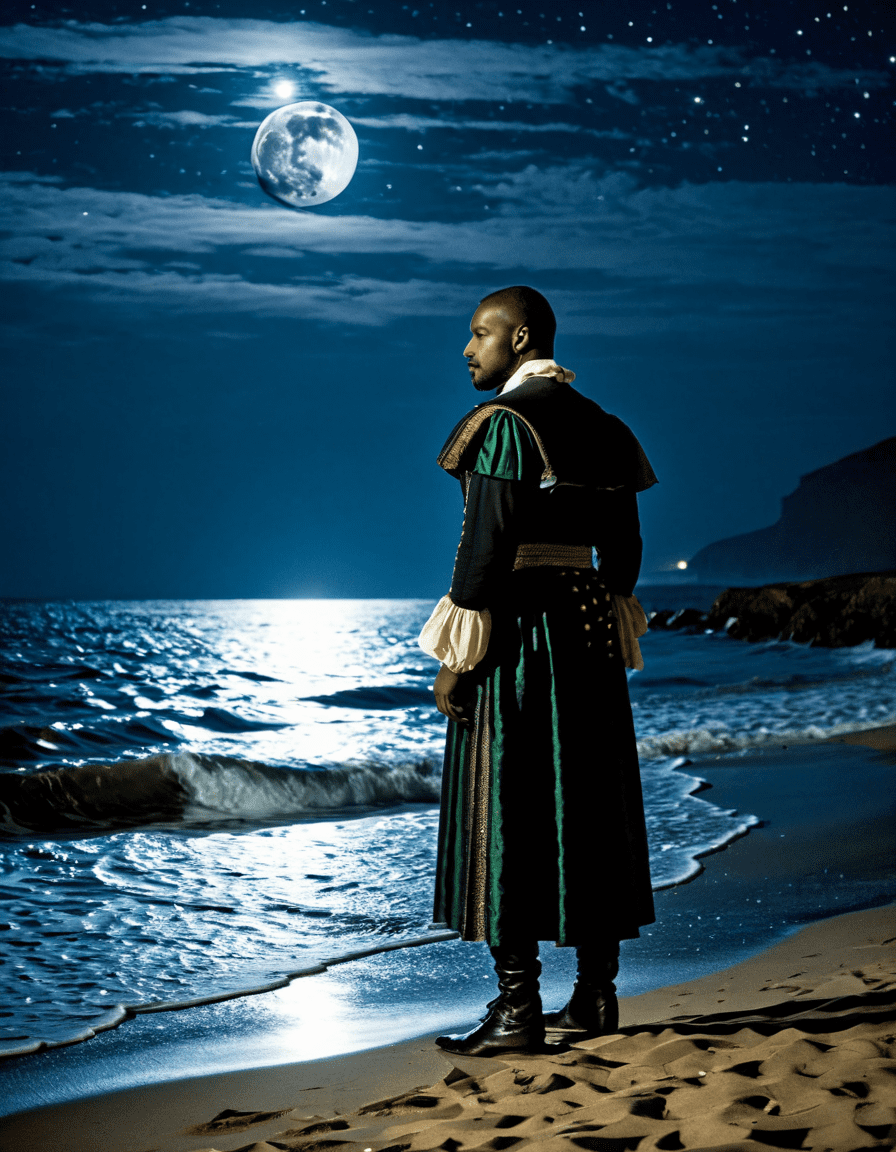
Othello vs. Romeos of the World: 7 Ways Othello Reflects the Struggles in Love
You’ve heard of star-crossed lovers, right? Well, Othello and Desdemona and Romeo and Juliet serve as prime examples of love’s tragic nature. Although their stories diverge, galloping through Shakespeare’s plays, their experiences resonate with us, revealing the opposing spectrums of love’s joy and sorrow. Let’s break down seven key parallels:
The Role of Iago: The Architect of Betrayal
Let’s not forget Iago, the charming serpent whose envy and ambition unravel Othello’s life. He’s often hailed as Shakespeare’s greatest villain, a master manipulator clawing into the depths of human nature. What drives Iago? His resentments fester—a toxic cocktail of ambition blended with bitterness. Iago’s motives echo through the ages, touching on themes of jealousy that still resonate in today’s society.
Each scheme he concocts sends ripples through the tapestry of relationships, ensnaring Desdemona and Cassio along with Othello in his treachery. Watching Iago’s transformation from friend to fiend highlights the stark reality of betrayal—a mirror reflecting our insecurities and the hidden demons that exist in each of us. His malevolent genius pokes at the raw nerves of love, leaving behind a trail of destruction that belies his smooth facade.
Fear not, Iago’s villainy doesn’t merely exist for entertainment; it’s an exploration of darker human impulses, a pearl of wisdom hidden in a sea of chaos. The anarchy he unleashes mirrors our current society, where trust can fuel flames of betrayal. No matter how many twists and turns Othello takes, Iago’s poisonous performance invokes profound questions about love, loyalty, and the lengths to which we will go for power and revenge.
The Intersection of Race, Identity, and Tragedy in Othello
In modern times, the racial dynamics of Othello present a chilling reflection of ongoing societal issues. Othello’s identity as a black man within a predominantly white society serves as a stark canvas against which the tragedy unfolds. His experiences resonate deeply, reminding us that even centuries later, perceptions of race continue to shape our interactions.
Recent adaptations—be it film, theatre, or even fashion—layer new meanings onto Othello’s narrative. The 1996 version of Romeo and Juliet, for instance, reinterprets themes of love and betrayal in a contemporary light while hinting at how societal norms dictate relationships. Othello’s tale reverberates through these adaptations, showcasing the complexities of identity and the relentless societal expectations, much like the bold ensembles of Vivienne Westwood shaking up the fashion world.
Exploring Othello’s identity in the context of race opens the door to meaningful discussions. It compels us to confront our biases and recognize the remnants of discrimination that still linger today. Through the lens of Othello, we can acknowledge the tragedy that emerges when racial dynamics overshadow love—a story as relevant now as it was between the lines of Shakespeare’s work.
The Legacy of Othello: From Shakespeare to Modern Interpretations
The legacy of Othello transcends time, having rippled out far beyond its Elizabethan origins, inspiring countless adaptations that keep its fiery themes alive and well. From riveting operatic interpretations to modern films, Othello continues to thrive and evolve—proving that human emotions are timeless, just like the best Movies Of 2025 will undoubtedly remind us.
Take a look at cinematic and theatrical recasts of this tragedy that breathe contemporary life into the old, much like how Little Miss Sunshine juxtaposes family dysfunction with raw honesty. The emotional depth of Othello resonates across various mediums, layering new perspectives over the classic narrative that may echo a runway show—where every piece wears its history, yet adapts to highlight the present-day world.
By remaining in the cultural zeitgeist, Othello challenges us to consider love, betrayal, and vengeance in ways that are disturbingly familiar. Adaptations offer fresh insights into the plotlines, ensuring that Othello maintains its relevance in our lives. Just as the Blue Bloods cast continues to explore loyalty and family ties, Othello’s legacy remains entrenched in the human psyche.
Final Reflections on Love, Betrayal, and Human Nature
Othello’s tragic journey reminds us of the beautifully chaotic interplay between love and betrayal, making us examine our hearts and the stories we tell ourselves. By reflecting on his character—and the symbiotic relationship shared with Romeo—we uncover poignant insights into the fragility of trust and the tragic essence woven into human connections.
It’s all about peeling back the layers in our own narratives, understanding how love can uplift, yet also lead us astray. Othello’s tale serves as a harrowing reminder, urging us to savor the fleeting beauty of relationships. Both the passion and distress stand as testaments to the vibrant spectrum of human emotion, ever relevant, echoing decisions made—just like choosing a bold outfit for the edgy fashion scene.
Dive into Othello’s depths, and you just might stumble upon wisdom hidden within the tragedy. Upon reflecting, you’ll find that beneath the dark edges, Othello doesn’t just narrate an ancient tale—it presents a haunting commentary on our lives, one that we often hesitate to confront, but desperately need to explore.
Othello: The Tragic Hero of Love and Betrayal
Othello’s Origins and Adaptations
Did you know that Othello, the tragic hero at the center of Shakespeare’s play, is believed to have been inspired by a real historical figure? The tale weaves a story of love, jealousy, and betrayal that transcends time. Speaking of adaptations, actor and director Ken Marino has put a modern spin on classic tales, showing us that even Shakespeare can adapt to new audiences. You can learn more about his contributions here.
Othello’s cultural background also adds layers to the narrative. He is often seen as an outsider, which raises intriguing questions about race and identity. Fun fact: Did you know that the name “Othello” itself is thought to derive from the Arabic word Mayate, suggesting connections to a more complex heritage? This historical context makes us re-evaluate the themes of love and betrayal within the play. Speaking of cultural impacts, the turbulence of Othello’s world is mirrored in the modern-day experiences of artists like Martell Holt, who explore similar themes in their works. Dive into that discussion here.
The Themes of Jealousy and Manipulation
One of the most chilling aspects of Othello’s story is how jealousy can drive a person to madness. The sinister character of Iago perfectly embodies this idea, manipulating Othello to tragic ends. Isn’t it fascinating how our understanding of jealousy evolves? Tom Daley, an Olympic diver, has touched upon the pressures and challenges of relationships, reminding us how complex love can be in the spotlight. Check out his insights here.
Moreover, Othello’s downfall reflects societal pressures that many can relate to today. This struggle is reminiscent of the sentiments expressed by Eminem, especially concerning personal turmoil—his relationship with his mom being a recurring theme in his music. Understanding these modern-day parallels can deepen our appreciation for Othello’s plight. If you’re curious, explore his story here.
The Legacy of Othello in Pop Culture
Othello has inspired countless adaptations, from film to theater. The enduring relevance of his story speaks volumes about human emotions. It’s fascinating how characters from the world of television, like the Blue Bloods cast, reflect traits of Othello’s struggle in modern settings, showcasing that themes of loyalty and betrayal are as relevant today as they were in Shakespeare’s time. You can see how they relate here.
Ultimately, Othello is more than just a play—it’s a lens through which we can examine our vulnerabilities in love and trust. So, next time you engage with this tragic tale, remember there’s a rich tapestry of history and culture woven into every line.