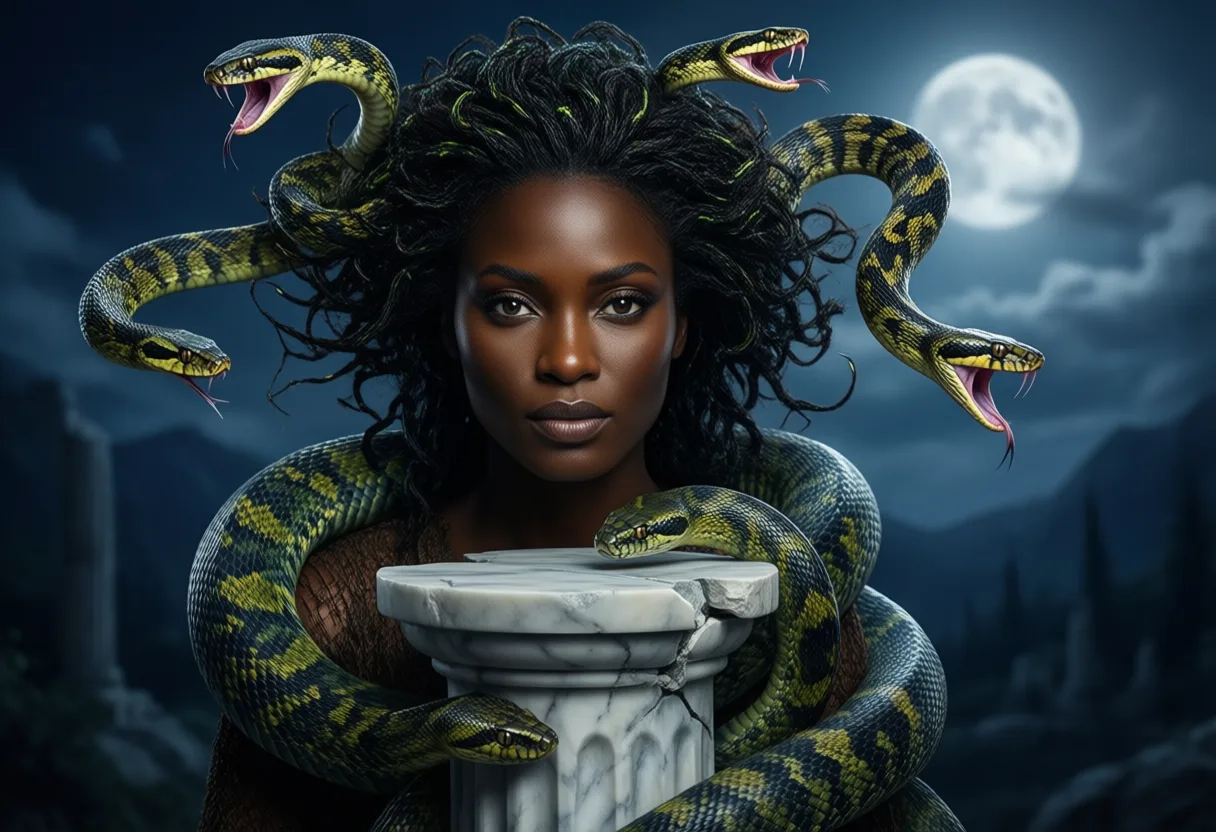
In the shadowed corners of myth, where serpents coil and stone breathes, one figure rises-not in silence, but in roar. Medusa, once cast as monster, now pulses beneath skin as a symbol of reclaimed strength, transformation, and unapologetic feminine power. Her image, inked in bold lines or whispered in watercolor haze, speaks not of fear, but of sovereignty over one’s own story.
Why Medusa Resonates as a Symbol of Feminine Power
She was cursed for Beauty, punished for violation, and silenced by decapitation-yet her legacy refuses to die. Medusa has become a modern emblem of resistance, a mirror held up to a world that too often demonizes female rage, sexuality, and autonomy. Her face, once used to ward off evil, now guards the boundaries of self-worth and inner fire.
In the language of ink, Medusa is no longer a warning to others. She is a declaration to oneself: I am not what they made me. Her serpents are not signs of corruption, but of rebirth-each one shedding old skins, hissing truths long buried. This is not a tattoo of horror, but of healing.
Women today wear her image like armor forged in myth and memory. It is not about vengeance, but validation-a way to say, I have been wronged, I have been broken, and still, I see clearly. Medusa’s gaze, once said to turn men to stone, now turns inward, demanding honesty, courage, and unflinching self-awareness.

The Myth Behind the Gorgon: From Victim to Victor
Ancient texts painted her as a monster, but the earliest versions of the myth tell a different story-one of violation and divine retribution turned cruel. Once a priestess of Athena, Medusa was transformed as punishment after being assaulted in the goddess’s temple. Her beauty became her curse, her hair writhing with snakes, her eyes capable of petrifying those who dared look.
But in this tragedy lies a quiet revolution. The very thing meant to isolate her-her gaze-became her power. She could not be approached without consequence; she could not be consumed without cost. In that shift, from prey to protector, lies the heart of her modern appeal.
Today, we see her not as a cautionary tale, but as a survivor. Her transformation was forced, but her strength was earned. The Medusa myth, when peeled back like layers of old skin, reveals a woman who, despite being stripped of agency, still commands awe. To wear her image is to honor the complexity of pain, power, and the right to define oneself.
How Modern Ink Reclaims Ancient Imagery
Tattoo culture has long been a space of reclamation-of taking what was once used to shame and turning it into a banner of pride. Medusa, once a symbol of fear, now thrives on skin as an icon of defiance and self-possession. Artists and wearers alike are rewriting her narrative, one needle stroke at a time.
Her image appears not in grotesque caricature, but in regal portraits, abstract interpretations, and dreamlike compositions. The serpents are no longer symbols of corruption, but of intuition, protection, and the constant cycle of renewal. The gaze is not one of malice, but of clarity-seeing through illusion, naming truth.
This reclamation is deeply personal for many. For survivors, for women who have been silenced or shamed, Medusa becomes a silent sister. Her story echoes across centuries, whispering: You are not ruined. You are remade. And in that remaking, there is beauty, power, and an unbreakable will.
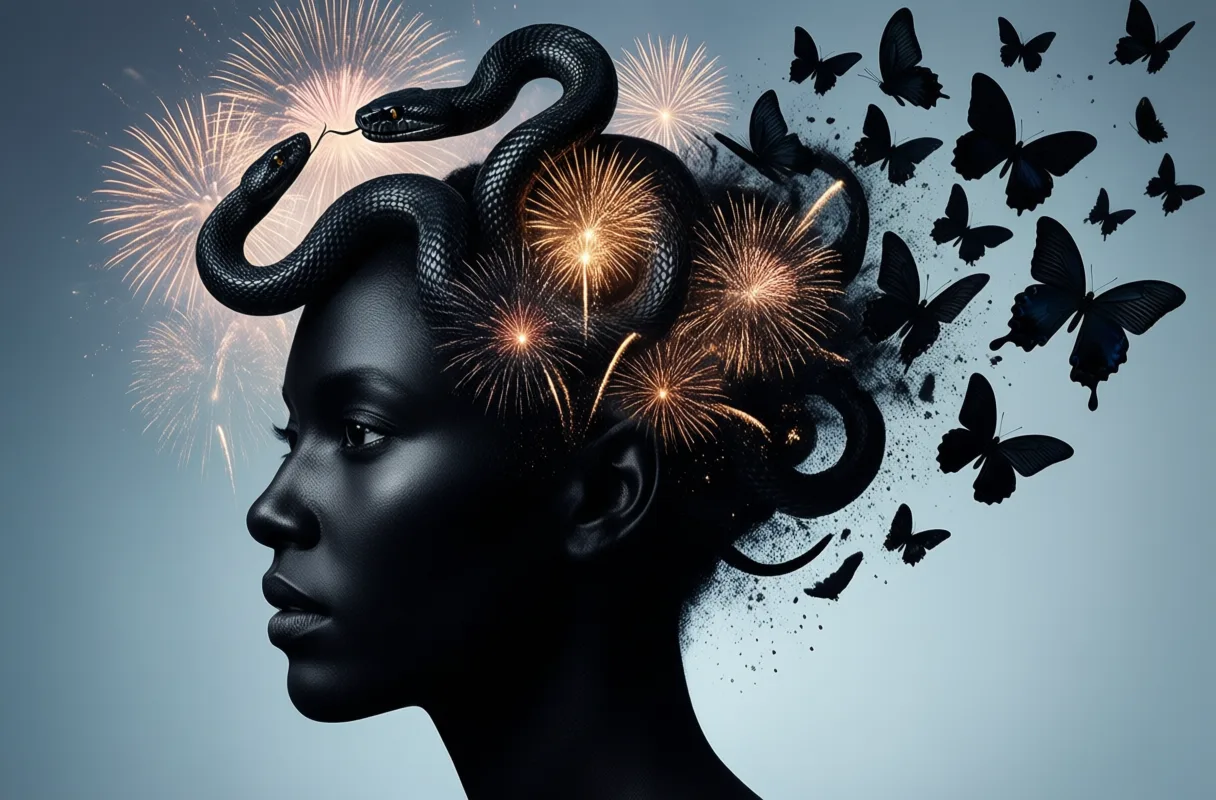
Tattoo Ideas Medusa: 10 Striking Interpretations
1. Serpent Crown: A Regal Take on the Classic
The crown of serpents is perhaps the most iconic element of Medusa’s visage. When rendered as a regal headdress, it transforms her from monster to monarch, placing her firmly on a throne of her own making. Each snake becomes a subject, a guardian, a symbol of wisdom drawn from ancient earth.
Artists often emphasize symmetry and elegance in this style, weaving the serpents into intricate patterns that frame the face like living jewelry. The effect is both majestic and unsettling-a reminder that true power does not seek approval.
This design works beautifully on the upper back, chest, or forearm, where the curves of the body can echo the sinuous forms. It’s a bold statement, not of aggression, but of sovereignty. She is not screaming-she is seated, watching, ruling.
2. Gaze Forward: Medusa Facing the Future
Most traditional depictions show Medusa in profile, her face turned sideways as if avoiding direct confrontation. But modern tattoos are increasingly capturing her in full frontality-eyes open, unblinking, meeting the viewer head-on.
This forward gaze is a radical act. It refuses the shame of being looked at; instead, it demands reciprocity. You look at me? Then I look back. There is no hiding, no softening-just presence, raw and undeniable.
Placed on the chest, shoulder, or thigh, this design becomes a personal mantra. It’s not about petrifying others, but about refusing to be turned to stone by judgment, criticism, or fear. She sees you, and she is not afraid.
3. Half-Face, Half-Myth: Split Design Symbolism
A split-face tattoo-half human, half Gorgon-offers a powerful visual metaphor for duality. One side may show soft features, gentle eyes, flowing hair; the other, scales, fangs, serpents writhing like storm clouds. It’s a portrait of transformation in progress.
This design speaks to the internal struggle so many feel: the tension between who the world expects us to be and who we truly are. The Medusa side is not the “bad” half-it is the awakened half, the one that refuses to be silenced.
Often inked on the neck, jawline, or upper arm, this style plays with symmetry and contrast. It’s a reminder that power doesn’t erase vulnerability-it integrates it. The monster and the woman are not opposites. They are one.
4. Minimalist Gorgoneion: Subtle but Striking
For those who prefer quiet strength over grand spectacle, the Minimalist Gorgoneion Offers a refined nod to the myth. A small, stylized face-sometimes just eyes and serpents-etched in fine line work, often on the wrist, behind the ear, or collarbone.
Less is more here. The simplicity draws attention not to size, but to meaning. A tiny Medusa can be a secret weapon, a personal talisman worn close to the pulse. It’s there when you need it, unseen by those who don’t know how to look.
These designs often use negative space and delicate linework, turning the monstrous into the elegant. The power isn’t in shock value-it’s in endurance, in the quiet certainty that you carry your truth with you, always.
5. Medusa in Motion: Dynamic Full-Body Pieces
Some visions of Medusa don’t stop at the face. Full-body tattoos depict her rising from stone, serpents cascading down her spine, arms outstretched as if breaking free from an invisible prison. These are not static portraits-they are moments of transformation captured in ink.
Flowing lines mimic the movement of water, smoke, or wind, suggesting she is not fixed in time, but evolving. Her body may blend into abstract patterns, floral vines, or stormy skies, emphasizing the fluidity of identity.
Best suited for the back, side, or leg, these pieces are epic in scale and emotion. They tell a story: not of a woman turned to monster, but of a woman becoming something greater than she was ever allowed to be.
6. Blackwork Brilliance: Bold and Unapologetic
Blackwork tattoos embrace contrast, depth, and drama-perfect for a figure as intense as Medusa. Using solid ink and geometric patterns, artists create striking compositions where light and shadow duel across the skin.
The serpents twist in high-contrast detail, their scales rendered with precision, their eyes glowing with implied life. The face may be framed by mandalas, Gothic arches, or tribal motifs, blending myth with global symbolism.
This style is not for the faint of heart. It announces itself. It does not whisper; it echoes. Wearing blackwork Medusa is like wearing a spell-ancient, potent, and impossible to ignore.
7. Watercolor Waves: Soft Hues, Strong Message
In stark contrast to blackwork, watercolor tattoos render Medusa in splashes of pigment-blues like deep ocean, greens like forest mist, reds like embers in ash. The effect is ethereal, as if she’s emerging from a dream or dissolving into the air.
The softness of the medium belies the strength of the symbol. Here, Medusa is not rigid or terrifying-she is fluid, emotional, alive. The colors may bleed beyond her form, suggesting her energy extends beyond the body, touching everything around her.
Ideal for the shoulder, upper arm, or ribcage, this style appeals to those who see power as something that flows, not dominates. She is not a statue. She is a storm painted in pastel.
8. Back Canvas: Expansive Scenes of Transformation
The back offers the largest uninterrupted canvas on the body, and many choose it for a full narrative of Medusa’s journey. These pieces often depict her not alone, but within a mythic landscape-ruins, temples, stormy seas, or celestial skies.
She may be shown in the moment of transformation, her hair becoming serpents, her skin hardening, her eyes blazing. Or she may stand triumphant, surrounded by those turned to stone, not out of malice, but as a natural consequence of their own gaze.
These tattoos are immersive, almost like wearable frescoes. They invite the viewer to step into the myth, to witness the birth of a goddess from the ashes of a victim. The spine becomes her axis, the body her temple.
9. Neck and Nape: Intimate Yet Unmissable
The nape of the neck is a powerful place for a tattoo-visible only when chosen, yet impossible to ignore when revealed. A Medusa inked here is both private and provocative, a secret shared only with those granted access.
Designs here are often small but potent: a single serpent curling around the base of the skull, a pair of eyes peering from behind hair, or a miniature Gorgoneion nestled between vertebrae. The placement makes it feel like a whisper against the skin.
It’s a location that speaks of control-over visibility, over intimacy, over one’s own image. To wear Medusa here is to say: I decide when you see me. And when you do, I will not be forgotten.
10. Medusa with Modern Elements: Merging Eras
Some of the most compelling designs fuse ancient myth with contemporary symbols. Medusa’s face may be framed by circuitry, woven into barbed wire, or emerging from a shattered smartphone screen. She wears flowers made of steel, tears that fall as stars.
These hybrid pieces reflect the modern woman’s experience-navigating digital spaces, societal pressures, and personal trauma while holding onto identity. She is not trapped in the past; she evolves with it.
This fusion isn’t gimmicky-it’s necessary. It shows that myth is not static. Medusa lives not in stone, but in the pulse of now, her story rewritten with every generation that dares to claim her.
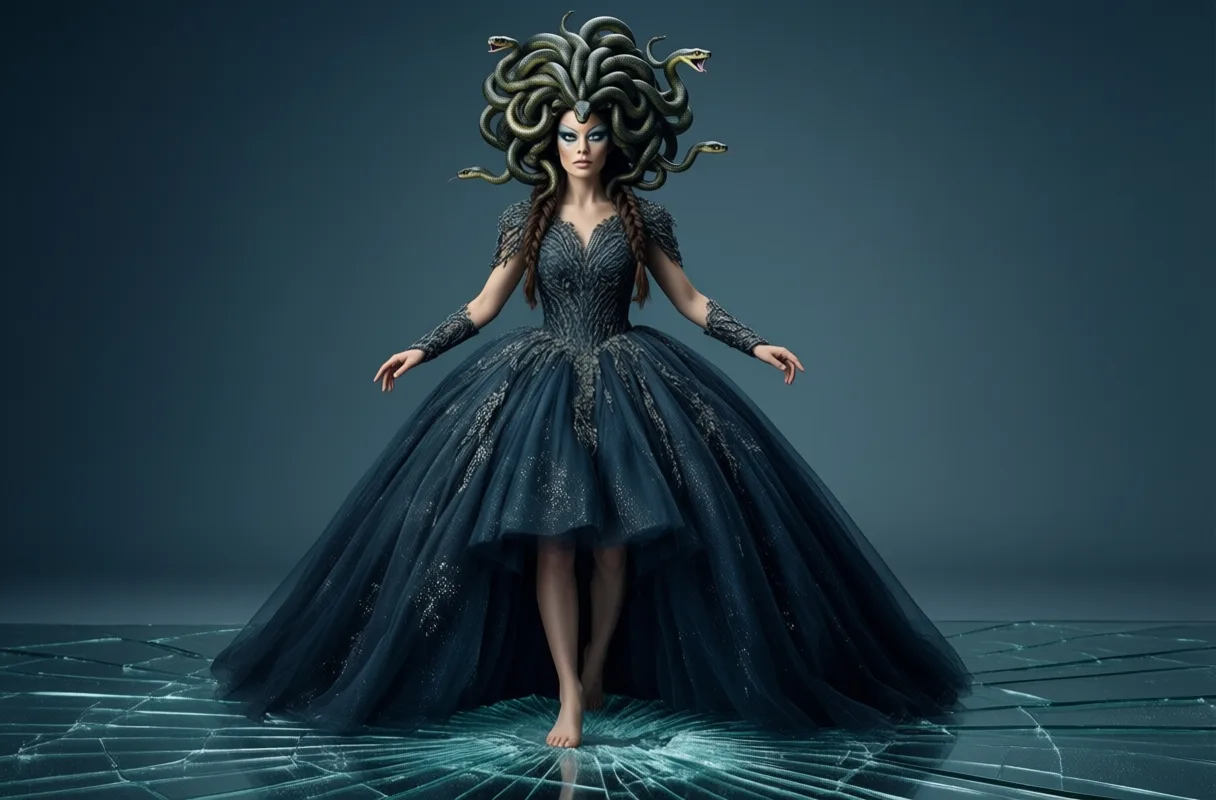
What to Consider Before Getting a Medusa Tattoo
Choosing a Medusa tattoo is more than selecting a design-it’s aligning with a legacy. Take time to reflect on what she means to you. Is she a protector? A survivor? A symbol of rage transformed into strength? Your connection to her story should guide the art.
Placement matters. Some areas are more visible, others more personal. Consider how the tattoo will age, how it will move with your body, and how it fits within your larger aesthetic. A bold back piece demands different care and commitment than a delicate wrist design.
Work with an artist who understands symbolism, not just technique. Review their portfolio for emotional depth, attention to detail, and ability to convey narrative. A great Medusa tattoo isn’t just well-drawn-it feels alive.
Final Thoughts: Wearing Power with Purpose
A Medusa tattoo is not merely ink-it is invocation. It is the act of calling forth a part of yourself that has been buried, silenced, or feared. To wear her is to say: I am seen, I am changed, and I am not afraid.
She is not a trend. She is a testament. A reminder that what the world calls monstrous may simply be misunderstood power. In her eyes, we see not petrification, but perception-clear, unflinching, true.
Let your tattoo be more than beautiful. Let it be brave. Let it be a mirror, a shield, a crown. And when you catch her reflection in the glass, remember: you are not wearing the myth. You are living it.
Reclaiming the Gorgon
From Monster to Muse
Medusa’s image in tattoo art has shifted dramatically over time, moving far beyond ancient myths of a cursed monster. Originally portrayed as a terrifying Gorgon with snakes for hair whose gaze turned men to stone, modern interpretations embrace her as a symbol of rage, resilience, and reclaimed power-especially within feminist circles. Many now see her not as a villain, but as a victim of divine violence who was punished for being assaulted, making her transformation a powerful emblem of survival and strength.
The snake, often feared, becomes a sign of rebirth and wisdom in Medusa tattoos, drawing from long-standing cultural associations with shedding skin and renewal. Unlike other mythological figures, Medusa’s face is almost always centered in designs, making the tattoo feel personal and confrontational-like she’s looking right at you, unapologetic and unflinching. This directness resonates with people who wear her image as a form of protection or self-assertion.
Some designs blend classical elements like Greek key patterns or temple columns with bold, modern lines, bridging ancient symbolism with contemporary identity. Others stylize her features abstractly-geometric shapes forming her face, or watercolor splashes mimicking flowing hair and serpents. Whether minimalist or detailed, a Medusa tattoo often carries layers of meaning: transformation, defiance, inner fury, and beauty on one’s own terms. Explore more stories, videos, and creators on Loaded.
Frequently Asked Questions
What does a Medusa tattoo symbolize for women today?
A Medusa tattoo symbolizes reclaimed strength, transformation, and feminine power. It represents resistance, self-worth, and the validation of surviving pain and breaking silence.
Why is Medusa seen as a symbol of empowerment rather than monstrosity?
Medusa is seen as a survivor of violation and divine punishment. Her image now embodies defiance, autonomy, and unapologetic truth, transforming her myth from victimhood to sovereignty.
What are popular styles for Medusa tattoos?
Popular styles include regal serpent crowns, full-face frontal gazes, split-face designs, minimalist Gorgoneion, blackwork, watercolor, and full-body transformation scenes.
Where are common placements for Medusa tattoos and why?
Common placements are the back, neck, nape, chest, forearm, and ribs. These areas allow for symbolic visibility or intimacy, reflecting personal control over how and when the tattoo is revealed.
This article was produced with AI assistance. How Twisted Magazine uses AI.
Mira explores the artistry behind tattoos and avant-garde beauty, spotlighting innovators who blur identity and expression. She approaches each piece as cultural narrative, weaving personal journeys with global trends in bold, intimate profiles.