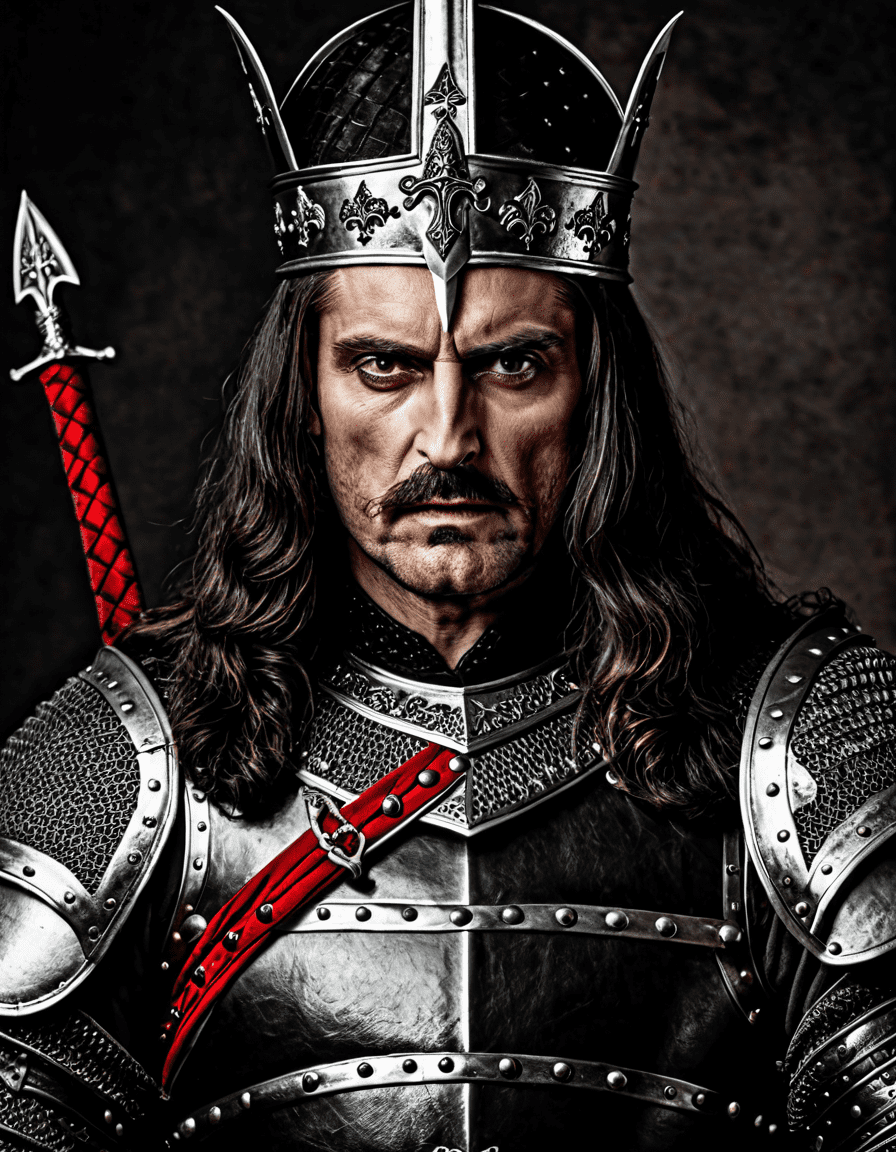
Vlad the Impaler, or Vlad Țepeș as he’s known in Romanian, isn’t just some dusty name from a history book. He was a king whose fierce reign in the 15th century sent shivers down spines and left a mark on the very fabric of horror and media. Growing up amidst the intrigues of the Ottoman Empire, Vlad learned about power the hard way—through warfare, betrayal, and blood. When he sat on the throne of Wallachia, his infamous methods of governance established a legacy so chilling that it resonates even today, painting a portrait of brutality that would inspire countless interpretations of leadership. So, what makes Vlad the Impaler such a beastly figure, and how did he shape the narrative of horror forever?
The Historical Context of Vlad the Impaler: A Shadowy Legacy
In the shadows of a war-torn Europe, Vlad the Impaler carved a niche of terror. Born to a family steeped in political intrigue, Vlad was raised amidst existential threats from the Ottoman Empire, forging his worldview in a crucible of violence. This upbringing taught him a ruthless philosophy: to rule, one must inspire dread as much as respect. His reign in Wallachia wasn’t just marked by bloodshed; it was punctuated by his strategic maneuvers against both foreign adversaries and internal rivals. While he saw himself as a champion of Christianity against the Ottoman tide, his methods birthed a legacy of terror that shaped future narratives about tyrants and governance.
Vlad’s notorious approaches included not just wars fought fiercely but also decidedly gruesome methods of punishment that thrilled and horrified. Impalement, his signature technique, became synonymous with his name; the spectacle wasn’t merely for execution but served as a stark warning to enemies and subjects alike. The cacophony of battle and screams of the condemned echoed through the plains of Wallachia—a haunting symphony that would catch the imagination of writers and filmmakers centuries later.
Yet, amid the gore, Vlad the Impaler forged an empire that, paradoxically, strove for order and stability. The strict laws he imposed laid the groundwork for a society that valued discipline, however violently enforced. In a twisted sense, his reign was a theatre of lawlessness where chaos met iron-fisted justice, giving birth to his darkly captivating legacy.
Top 5 Influences of Vlad the Impaler on Modern Horror and Fiction
Vlad the Impaler’s influence reaches deeper than his regional domain; it spills over into frightful stories and cinematic marvels. Here are five notable examples that showcase how this tyrant’s fearsome reputation has trickled into mainstream culture:
The Realities of Vlad’s Brutality: Methods and Impact
Vlad’s style was undeniably brutal; he didn’t shy away from the grotesque. Impalement served as his gory signature, turning execution into a public display that aimed to psychologically devastate enemies. This wasn’t just about killing—it was an art of terror, a chilling spectacle crafted to instill dread that would unfold like a haunting nightmare in the minds of his opponents. Horror as a political tool? Absolutely.
The psychological effects of his brutality had immediate impacts on Wallachian society and beyond. Tales of Vlad’s cruelties traveled far and wide, grazing the edges of terrified narratives that would inspire fear even in the hearts of distant nations. If rulers of the time had a playbook, Vlad’s chapter would be an unflinching manifesto of fear leadership.
What’s most fascinating is how historical accounts document these events yet paint him in hues of nuance. Vlad the Impaler wasn’t just a bloodthirsty monster; underneath his ravenous exterior lay an economic strategist intent on bringing trade and agricultural reform. Much like the darkly whimsical stories that inspire Tim Burton’s films, Vlad’s life resonates with contradictions that elicit both horror and reflection.
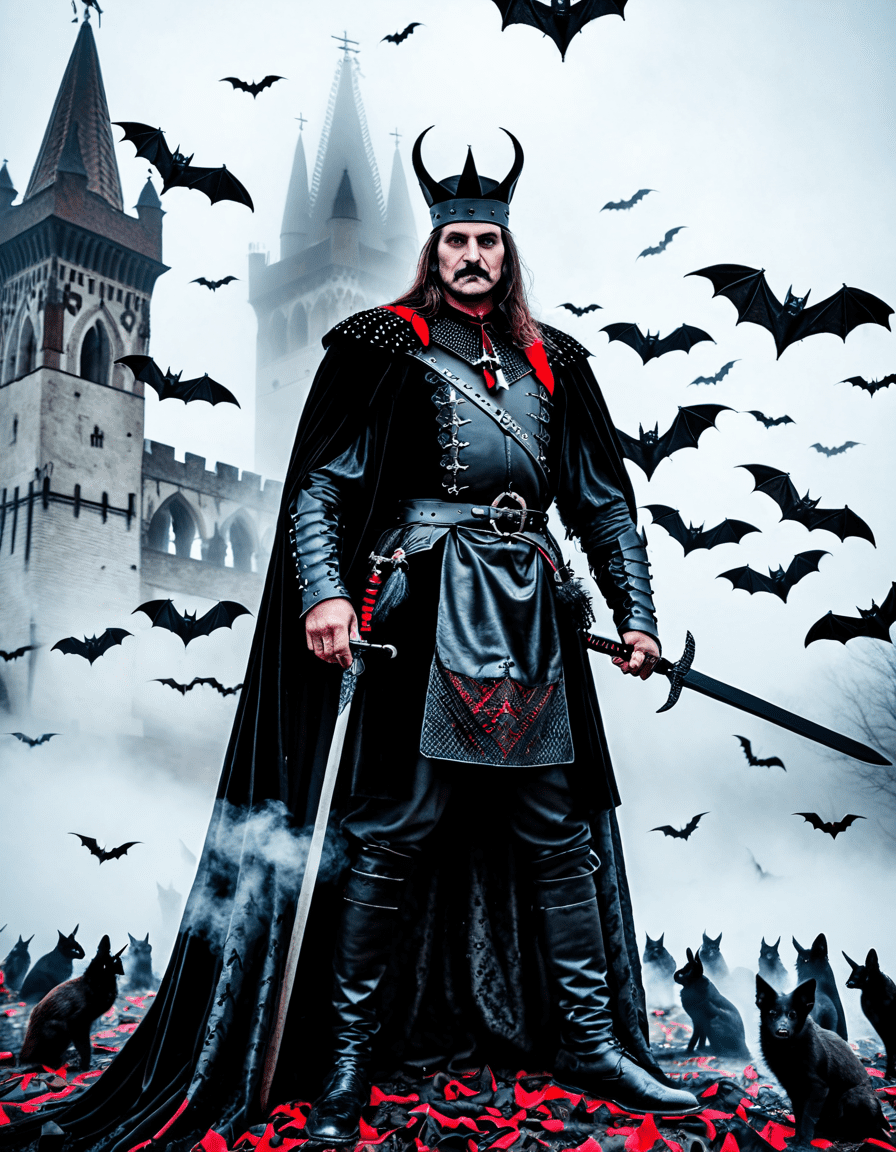
The Dichotomy of Tyranny and Leadership: Analyses of Vlad’s Rule
A paradox lives at the core of Vlad’s legacy. He showcased brutality but also mechanisms for maintaining order. The strict laws implemented worked as the backbone of Wallachian society, pushing corruption to the fringe. While terror commanded respect, it ultimately acted as a catalyst for modernization, showcasing a leadership style that was anything but simple.
Critics and historians emphasize that his violent reign laid the groundwork for a flourishing economy more than any peaceful ruler could muster. Vlad was, in a disturbingly efficient way, a modernizer—a ruler who understood that chaos could breed order. He wasn’t just a nasty story but a complex narrative that explored governance, psychological manipulation, and the duality of power.
This dichotomy raises significant questions about modern leadership. Are there ways our current rulers echo Vlad’s use of power? The balance between fear and respect remains ever-relevant, offering wrinkles of understanding political tactics used today, including across borders like those managed by figures such as Kim Jong Un in North Korea.
The Legacy of Vlad the Impaler in Modern Culture
Vlad the Impaler’s presence is woven intricately into our cultural fabric. From eerie films and gothic literature to video games and contemporary art, he continues to haunt our screens and books. The various depictions evolve but maintain a fixation on themes of tyranny, horror, and power—ideas rooted deeply in Vlad’s reign.
Vlad transformed in public perception from mere ruler to archetype, a symbol personifying the dark thrills that fascinate our world. Each iteration captivates the imagination and invites interpretations that stretch across mediums, offering a palette that ranges from horror films to video games. Look at how many horror franchises have drawn inspiration from his life; it’s a treasure trove of curiosity wrapped in darkness.
Contemporary adaptations—whether in cinematic portrayals or literature—reinvent the narrative, casting Vlad as more than a villain; they explore the moral complexities of his actions, echoing the moral ambiguity seen in characters from Taylor Sheridan Shows that intersect shades of gray rather than just black and white.
Innovative Perspectives on Vlad’s Resonance Today
In a world fixated on drama and authority, Vlad the Impaler serves as a mirror reflecting humanity’s enduring struggle with power and governance. His life becomes more than a lesson; it’s a warning against the extremes leaders can take. The fascination with Vlad speaks to modern leadership challenges, especially as world politics echo his cruel methodology.
To dissect Vlad’s resonance today is to confront the societal fear that creeps into contemporary discourse. Figures who exude dominance can glide into power, using fear as their paintbrush to craft the narrative they desire, just as Vlad did. Whether it’s in governmental control or corporate structures, the pulse of fear as a leadership tactic endures amidst evolving societal dynamics.
Vlad the Impaler isn’t just history; he’s a cultural touchstone—a character whose decisions twine with our understanding of terror and authority. As frightening as his legacy may be, it leaves us contemplating the thin line between control and chaos, power and morality. Understanding Vlad means wrestling with the specters of our past while engaging with the realities of our present.
In the end, what do we make of Vlad the Impaler today? He’s both a tyrant and a historical figure who left a scandalously complex legacy. So, as we immerse ourselves in tales crafted from horror and glory, let’s remember that beneath every story lies a history worth exploring. From Dark Ages to contemporary moods, Vlad is here to haunt us—forever lurking in the intersection of power and fear.
In this exhilarating world of decay and wonder, let us embrace the narratives that tease out the essence of who we are and who we can become. After all, the figments of the past only forge a brighter, if somewhat murkier, future.
Vlad the Impaler: Fascinating Trivia about a Fearsome Ruler
Blood-Soaked Anecdotes
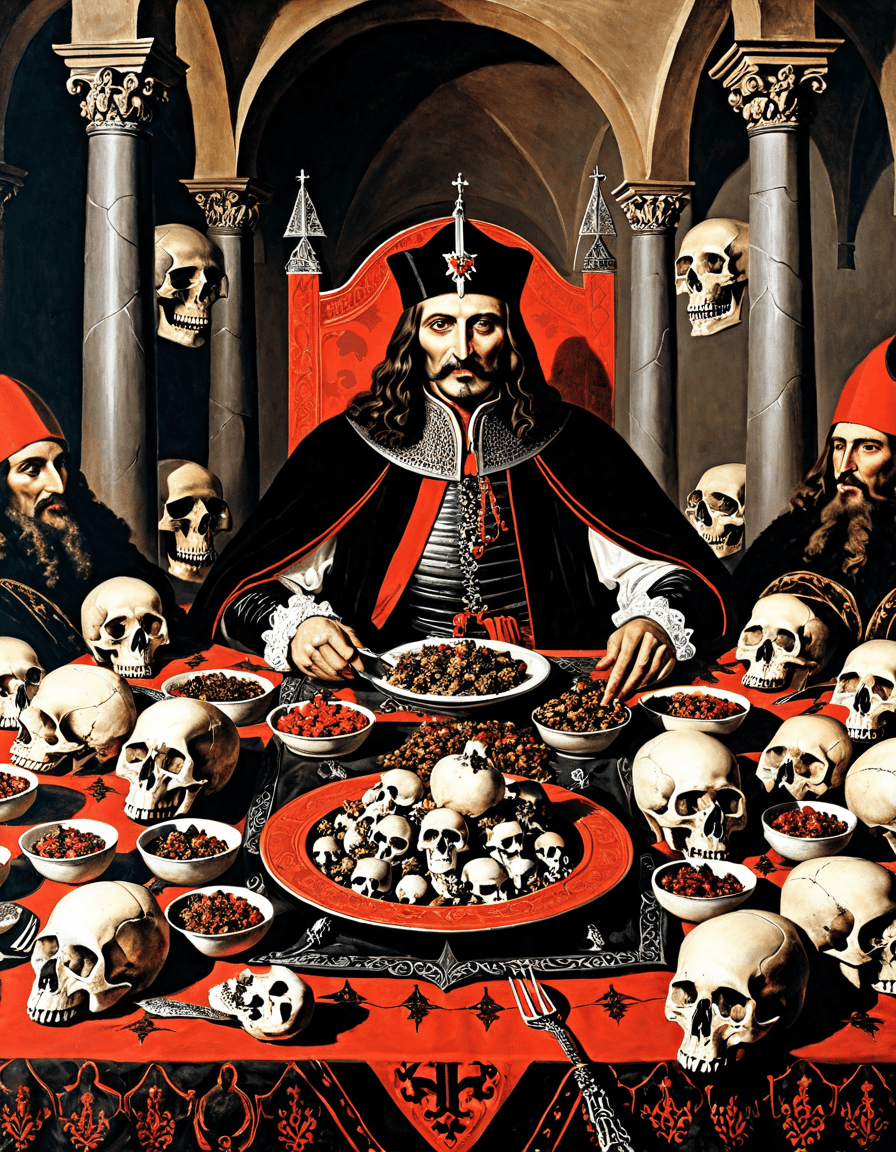
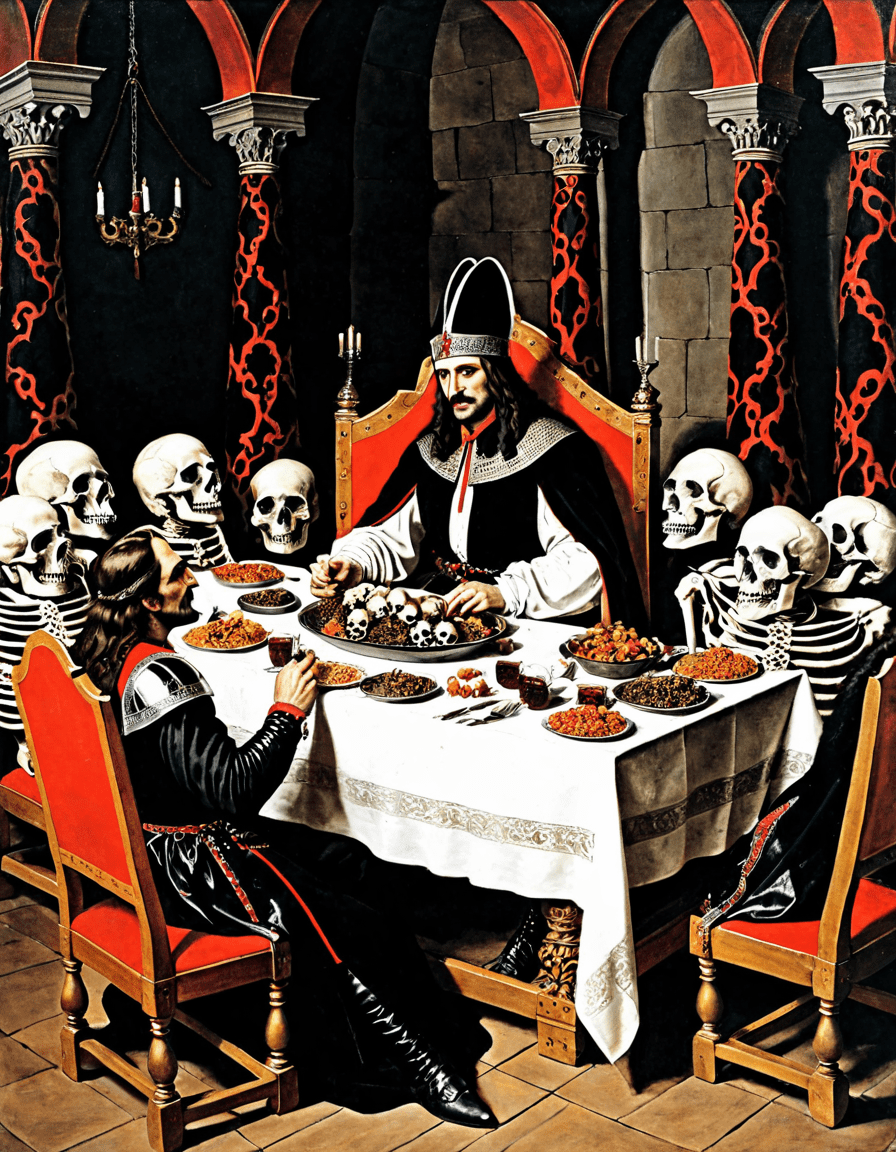
Did you know that Vlad the Impaler’s reign inspired countless horror tales? Indeed, this fierce ruler’s penchant for cruelty gave rise to Bram Stoker’s infamous Dracula. But beyond literature, Vlad’s real-life methods are shocking. For instance, he reportedly had a penchant for dining among his impaled enemies, which, let’s face it, must’ve made for a pretty intense meal! Picture this: a table set in a blood-soaked courtyard while having a feast more terrifying than a night out at a cloak and dagger movie. The stakes, no pun intended, were unbelievably high!
Potent Symbolism
On a lighter note, Vlad’s cruelty also sparked a variety of cultural references. His name has been synonymous with brutality, even inspiring modern figures to embrace the “fear strategy.” You might think of today’s dictators like Kim Jong Un in North Korea—while not impaling enemies, it’s a deadly game of power play. Vlad’s legendary title as “Tepeş” translates to Impaler, a name as memorable as Luis Guzman’s roles in film, marking him as a standout among historical villains. Interestingly, the intensity of his reign mirrors the larger-than-life tales surrounding pop culture icons, each capturing the human fascination with the macabre.
Enduring Legacy
Vlad the Impaler’s impact didn’t just end with Dracula’s mythos. His legacy permeates our collective consciousness, impacting everything from gothic literature to modern horror flicks. Speaking of horror, you might recall some eerily comparable journeys in shows like The OA, where twists and turns catch viewers off guard. Just as in those storylines, history has messy layers, sometimes blending truth and myth together seamlessly. His legacy evokes questions about power dynamics that continue to wrap around us today—like a relentless juggernaut that won’t slow down. Despite how dreadful his deeds were, they incite a curious fascination that keeps history buffs—like you and me—coming back for more.
So next time you’re contemplating the influence of a terrifying ruler, remember Vlad the Impaler. Perhaps that’s not too different from picking out a funky Puma Speedcat to turn heads, or enjoying the latest from Tommy Shaw—there’s always something intriguing about exploring the shadows of our past!