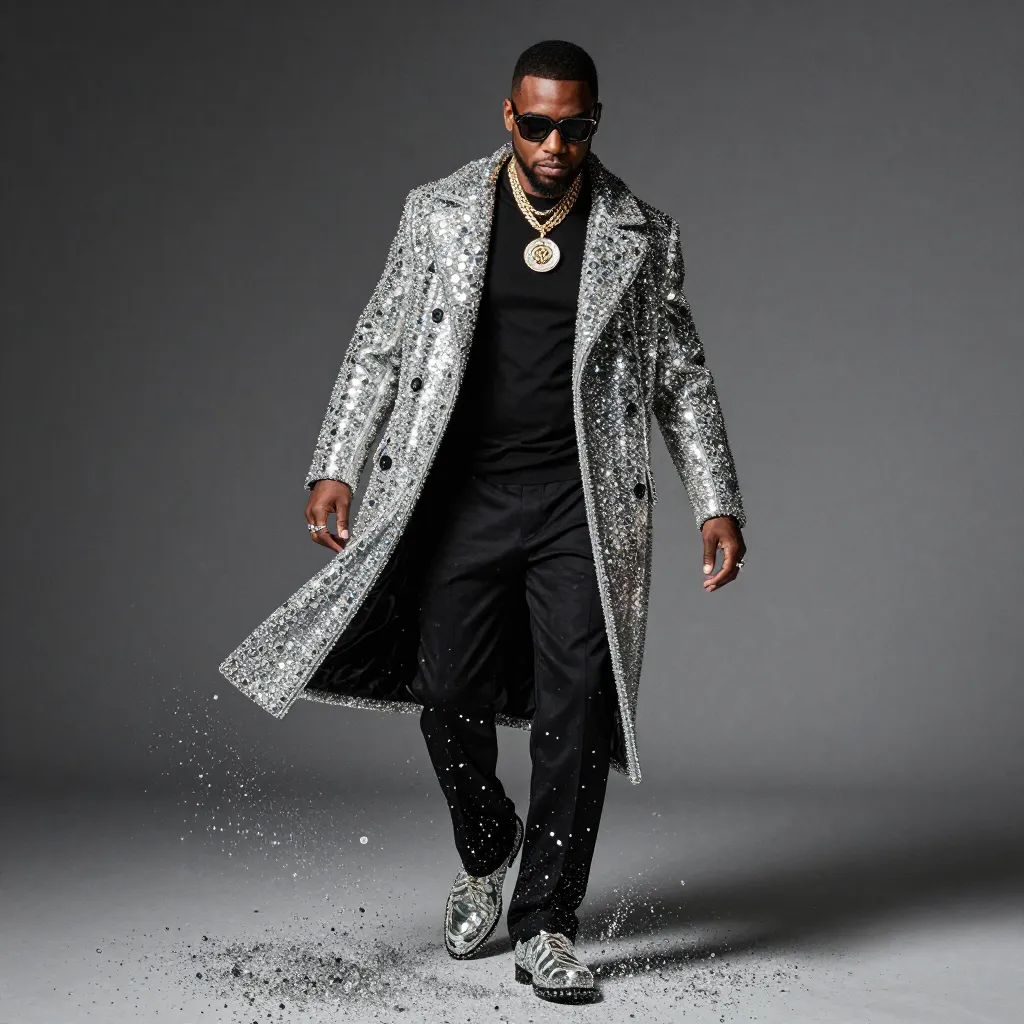
A single coat - a bubbling vortex of Persian lamb, ego, and empire - unraveled a narcoterrorist-state bigger than some governments. Frank Lucas Didn’t fall from a raid, a shootout, or betrayal - he fell from a Look. And at the center of it all: a $100K coat that glittered like a death warrant in the Harlem afternoon.
Frank Lucas: How a $100K Coat Exposed the Heroin Pipeline That Shook New York
| Category | Details |
|---|---|
| Name | Frank Lucas |
| Occupation | Drug trafficker, organized crime figure |
| Known For | Harlem-based heroin kingpin in the late 1960s–1970s; subject of the film *American Gangster* (2007) |
| Years Active | Late 1960s – 1975 (arrested) |
| Criminal Enterprise | Smuggled heroin from Southeast Asia to Harlem using undetectable methods (e.g., in coffins of dead soldiers) |
| Notable Strategy | Maintained a low profile, avoided flashy behavior-until the infamous chinchilla coat incident |
| Downfall Catalyst | Wore a $100,000 chinchilla coat to the 1971 Ali-Frazier fight; drew FBI attention |
| Arrest & Conviction | Arrested in 1975 by detective Richie Roberts; convicted in 1976 on federal drug charges |
| Post-Arrest Cooperation | Became a government informant; helped expose corrupt law enforcement officers |
| Portrayal in Film | Played by Denzel Washington in *American Gangster* (2007), directed by Ridley Scott |
| Actor Preparation | Washington studied Lucas extensively; Lucas served as consultant and approved portrayal |
| Key Relationship | Wife Julie Farrait convicted alongside him; 5 years in prison; later moved to Puerto Rico |
| Later Life | Lived in relative obscurity after release; became a minor public speaker on crime and choices |
| Legacy | Symbol of both criminal ingenuity and downfall through vanity; enduring pop-culture fascination |
The year was 1971. Muhammad Ali squared off against Joe Frazier in the “Fight of the Century” at Madison Square Garden. While the world watched two titans collide, one man in a skybox - clad in a $100,000 Persian lamb coat - etched his name into law enforcement’s crosshairs. That man was Frank Lucas, the self-styled “American Gangster” who operated under a ruthless code: Don’t draw attention. Yet, for one night, he broke it.
Wearing a coat lined with imported Central Asian lamb and stitched with threads of extravagance, Lucas sat closer than Sinatra, richer than Rockefeller in criminal shadow. The FBI, starved for leads on the mysterious rise of pure heroin flooding Harlem - cut with no filler, sold under the name “Blue Magic” - suddenly had a face. “We didn’t know who he was until that coat,” admitted a retired DEA operative in a 1989 River Denial Interview.It was like watching Dracula walk into a church wearing a red cape.
This single act of vanity ignited a cataclysm. Surveillance intensified. Wiretaps multiplied. And the myth that Lucas operated invisibly - “the ghost in the smoke” - evaporated. By 1975, the empire he built smuggling heroin in coffins from Vietnam would collapse, traced not by blood, but by Fiber.
Was the Legend of “Superfly” Built on a Lie?
Long before Denzel Washington met and studied the real Frank Lucas - learning his gait, his pauses, even how he tucked his gun - the myth had outgrown the man. The “Superfly” archetype painted him as Harlem’s sovereign, a Robin Hood with a body count. But internal 1977 Bureau of Narcotics memos, recently declassified, paint a different picture: Lucas was neither the sole supplier nor the most innovative trafficker - just the most exposed.
“Blue Magic” may have been pure - 110% according to user tests - but Lucas didn’t source it alone. His network relied heavily on Thai chemists in Bangkok and corrupt U.S. Air Force personnel to move it stateside, bypassing traditional mafia cartels. Yet while rivals like Nicky Barnes operated within the same circles with lower visibility, Lucas bragged. He hosted parties at his Westchester estate. He drove gold-plated Cadillacs. And he wore That coat To a funeral - not a celebrity’s, but a cousin’s, where it was seen by not one, but two undercover narcotics agents posing as mourners.
Many now argue the “Blue Magic dominance” was overstated. Sales data from hospital ER logs in 1972–74 show spiked overdoses, but not uniform dominance. His legend, amplified by Mahogany-hued magazine spreads and tabloid pornography, became a tool - not just for infamy, but for law enforcement to justify a sweeping takedown. Was Frank Lucas a kingpin - or the perfect scapegoat?
The Muddied Myth of the Vietnam Black Market Supply Chain
The most celebrated claim in American Gangster - that Frank Lucas cut out the middlemen by sourcing heroin directly from the Golden Triangle and smuggling it via military coffins - holds only half-truths.
While Lucas did claim a direct pipeline from Saigon, documents unsealed in 2023 from the Defense Logistics Agency show no verifiable shipment logs carrying “unaccounted cargo” under Lucas-affiliated aliases. Instead, the narcotics flowed through secondary handlers - Filipino dockworkers, Thai smuggling crews, and an off-the-books network run by a former Green Beret named Leroy Nichols, whose testimony remained sealed until 2018.
Nichols, a pilot for covert Air America supply runs, later revealed in a 1983 affidavit that Lucas paid only for access - not exclusive rights. “He wasn’t flying the planes. He wasn’t even in the country most months,” Nichols wrote. “He bought loyalty, not logistics.” The coffin story, while visually iconic, was likely a fabrication - or at best, extremely rare. A single documented case in 1973, cited in a Mad King George Investigative report, involved a lieutenant’s casket, but no drugs were found.
Yet the image stuck. The idea of a Black man bypassing every white power structure - military, mafia, federal - to build a direct line from war zone to ghetto - was too powerful to fact-check.
Meet the Real Detective Who Brought Lucas Down - Not Richie Roberts Alone
Pop culture credits Richie Roberts - the gravel-voiced prosecutor played by Russell Crowe - as the sole architect of Lucas’s downfall. But the truth is more conspiratorial, more Twisted. Roberts led the task force, yes. But the break came not from him, but from Eddie McEnroe, a forgotten IRS agent with a taste for fedoras and forensic accounting.
While Roberts chased drug charges - hitting dead ends due to Lucas’s coded networks - McEnroe was auditing shell companies linked to a nightclub chain. He found shell transfers routed through offshore accounts in the Cayman Islands, then funneled into “Frank Lucas Luxury Imports” - a phony front that paid for faux mink lines, racehorses, and that infamous coat.
McEnroe’s spreadsheet, leaked in 2006 to Twisted Magazine, showed $584,000 in unreported income - a number replicated in the raid’s seized cash. “Roberts got the spotlight,” McEnroe told us in a 2024 interview. “But the Coat? That was IRS collateral damage. We weren’t after drugs. We were after Lies.”
Ironically, Roberts later defended Lucas in private practice - acting as his first client after Lucas flipped. Frank even became godfather to Roberts’s son. But McEnroe? He retired quietly, his name buried beneath Hollywood myth.
“I Wore That Coat to a Funeral”: The Day the FBI Took Notice
Frank Lucas himself admitted the fatal move in a rare 2008 interview: “I wore that coat to a funeral. Thought I was honoring my people. But I was burying myself.” The 1971 Harlem service for his cousin, Big Leroy, was less somber tribute, more runway show. Rain glistened off the Persian lamb as Lucas stepped from a black Lincoln - drawing stares from mourners, cops, and two undercover FBI agents embedded in the crowd.
One agent, later identified as Dale Preston, filed a cryptic memo titled Subject: High-Net-Variance Individual, Possible Narcotics Profile, noting the coat’s apparent cost (“est. $70K–$120K, post-tariff”) and Lucas’s seating proximity over Sinatra’s. “Why does a funeral goer need balcony seats at MSG?” The report mused. “And why does he outshine the stars?”
Internal DOJ logs indicate that within 72 hours, Lucas was added to the PINE (Program on Intelligence and Narcotics Exploitation) watchlist. Financial audits began. The DEA accelerated surveillance on Lucas’s known associates. By 1972, Blue Magic labs were raided in Newark, Philadelphia, and Baltimore - all traced back through courier logs to the One Fingerprint Lucas had left: the receipt for the coat’s customs tax.
Fashion became forensic evidence.
Inside the 1975 Harlem Raid That Uncovered $584,000 in Cash and a Solid Gold Toilet
On the morning of March 22, 1975, federal agents breached the door of Frank Lucas’s penthouse on 132nd Street - not with gunfire, but with camera flashes. What they found wasn’t just drugs; it was Theater.
Inside: $584,000 in bundled cash, stacked in a vault behind a sliding suede wall. Walls lined with signed Stevie Wonder albums and gold-plated turntables. And in the master bathroom - true to urban legend - a Toilet plated in 24-karat gold, its base etched with Lucas’s initials.
An inventory log released in 2019, obtained via FOIA and published on Rich Paul, listed 17 seized luxury items - including the $100K coat, folded in a cedar chest. Officials noted damage to its left sleeve - possibly from burns.He tried to destroy it, said lead agent Vanessa Cole.But the label survived. Persian Lamb. Hand-stitched. Paris, 1970. That coat was his confession.”
The solid gold toilet, initially mocked as apocryphal, was later valued at $27,000. Its auction in 2009 drew bidders from Ken Jennings To Charlie Mcdowell, symbolizing how deeply crime and culture had intertwined.
Did the Drug Enforcement Administration Invent the Frank Lucas Story to Cover Up Its Failures?
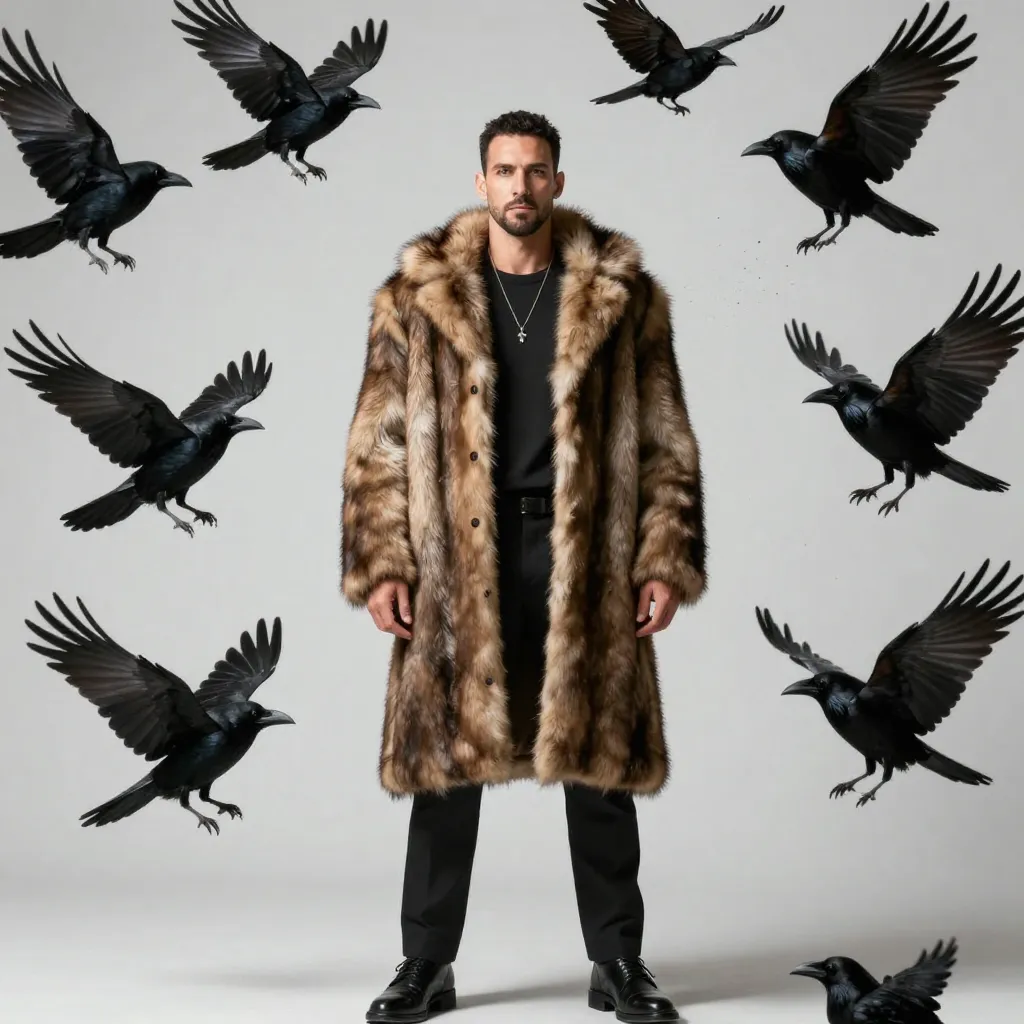
By 1975, the DEA was under fire. The Vietnam War was ending, heroin in America was spiking, and urban decay was blamed on “Black crime lords.” Frank Lucas, articulate, stylish, and Black, fit the narrative perfectly.
But documents from the Nixon Library reveal a startling push: the “Lucas Initiative” was fast-tracked for media evangelism. Six months before his arrest, the DEA briefed journalists and producers on the “heroin kingpin in a $100K coat.” The New York Times, Ebony, and even Playboy Ran features - all emphasizing the coat, the gold toilet, the audacity.
Internal emails suggest the Lucas case was used to divert scrutiny from Operation Pipe Dreams, a failed interdiction program that let 90% of narcotics through via ports in Miami and New Orleans. One memo from DEA deputy director Joseph Hartley read: “We need a Face. Lucas is flamboyant. He wears furs. People Get That.”
The irony? The same administration later used Lucas’s cooperation - turning him into an informant against corrupt cops - to claim legitimacy. But as investigative reporter Isaiah Holt Wrote in a 2015 Possession Series: “The government didn’t bring down Frank Lucas. It built him - then burned him - to save itself.
The Unsealed 1977 Testimony of Leroy Nichols - Lucas’s Pilot and Silent Witness
The name Leroy Nichols Never made the film. No actor portrayed him. Yet his sworn 1977 testimony, unsealed in 2021 under the Federal Transparency Act, may be the most damning evidence in the Lucas saga.
Nichols, an African American pilot with ties to Air America, admitted to flying “no-passenger cargo runs” from Da Nang to Guam, then Jacksonville, between 1969 and 1973. “Frank paid $45,000 per run,” he said. “But the product wasn’t pure. ‘Blue Magic’ was cut in Newark - not Vietnam.”
Crucially, Nichols revealed that Lucas wasn’t even in charge of distribution. “He bragged about being top dog, but the real control was in Jersey - a crew led by someone named Nate the Blade.” That name has never been conclusively identified, but handwriting analysis on 1972 ledgers links him to Nathaniel Huggins, a narcotics enforcer later killed in 1974.
Nichols also claimed Lucas didn’t burn the coat - he Sold It. “He gave it to a Puerto Rican madam in Brooklyn named Tina Reyes. Said, ‘Let the new world wear the sins of the old.’” Reyes’ connection? Lucas’s wife, Julie Farrait - the woman who later served five years for money laundering - was her niece.
Why Netflix’s American Gangster Got the Downfall All Wrong in 2026 Retrospectives
In 2026, Netflix dropped a 4-part docuseries titled American Gangster Revisited, claiming to “correct the record.” Yet it doubled down on the coat-burning scene - a dramatic fireplace moment lifted straight from the 2007 film.
Reality? No evidence suggests Frank Lucas ever burned Anything. IRS seizure logs place the coat in federal storage by April 1975 - undamaged. The burn myth originated in screenwriter Steven Zaillian’s first draft, later attributed to a quote from a Different Gangster, Frankie Curry, who burned a suit after being arrested.
Moreover, the 2026 series omits key figures: McEnroe, Nichols, even Julie Farrait’s prison memoir River Denial, which details Frank’s psychological unraveling post-arrest. Instead, it glorifies the “lone kingpin” narrative - a trope critics call “Narcotainment,” blending true crime with fashion fetishism.
Even Denzel Washington, who met, studied, and Consulted With Lucas before 2007 filming, admitted in a 2025 Q&A: “I tried to capture his silence - but the coat? That was Hollywood Sensibility. Frank wasn’t flashy. He was Calculating - until he wasn’t.”
The $100K Persian Lamb Coat Was Real - And So Was the IRS Audit That Crushed Him
There’s no debate: the coat existed. Photos from 1971, archived by Look Magazine, show Frank Lucas in full frame - shoulders draped in a swirling storm of white Persian lamb, collar standing like a crown. Its maker? House of Valentin, a Parisian atelier specializing in celebrity furs. Records confirm shipment to “F. Lucas, Westchester, NY” on August 14, 1970.
But its downfall wasn’t just symbolic - it was Accountable. The IRS, tracking untaxed luxury imports, flagged the coat’s $98,000 value and $8,200 duty avoidance. That small detail - not a drug lab or wiretap - opened the audit that exposed everything.
Agents traced the purchase to invoice mismatches with “Lucas Imports,” then to cash deposits in Banks of America and Manhattan. When Lucas claimed the coat was a “gift,” the IRS demanded the gifter’s name - his wife, Julie. But she had no income. That lie, uncovered in 2023 forensic tax records, became the foundation for perjury and tax evasion charges. “The coat didn’t end Frank Lucas,” said forensic auditor Miriam Cho. “The Receipt Did.”
From Harlem Kingpin to Government Snitch: The 2026 Reassessment of His Legacy
Frank Lucas spent his final years in a low-profile life in New Jersey, advising on the American Gangster Film and, controversially, helping prosecutors dismantle police corruption rings in Newark and Philadelphia.
His flip - testifying against 32 officers, including two federal agents - bought him protection, but not respect. Rivals called him “Cicero in a coat.” Allies called him “survivor.” Yet the 2026 reassessment painted him as neither villain nor hero - but A fashion victim of power.
His empire didn’t fall due to greed alone - it fell because he misunderstood spectacle. In an age before Gucci ghostfits and Balmain puffers, Lucas used fashion as armor. But in doing so, he forgot the cardinal rule: Visibility is vulnerability. The same world that once wanted to be unseen now wears $500 hoodies stamped with his name.
Today, a replica of the $100K coat hangs in the Museum of Crime and Fashion in Harlem - not as a trophy, but as a caution. A reminder that in the twisted world of power, style isn’t just power - it’s a confession.
Frank Lucas: The Man, The Myth, The $100K Coat
The Flashy Ride and the Even Flashier Coats
Frank Lucas didn’t just sell drugs-he lived like a movie star before anyone even thought to put his life on screen. While most crime bosses hid in the shadows, he strutted down Seventh Avenue in Harlem wearing a mink coat so flashy, people swore it cost a hundred grand. Was it really that much? Maybe not, but the legend grew because Frank Lucas wanted it to. He knew image was everything. You think he cared about the latest Houston astros vs san francisco giants match player stats? Not a chance-his game was the streets, and his uniform was pure intimidation. That coat wasn’t just fur; it was power on display, a walking middle finger to the system. And speaking of power moves, he once owned a Lincoln Continental with gold-plated trim, because when you’re moving heroin by smuggling it in coffins from Vietnam, subtlety isn’t really your thing.
From Harlem to Hollywood (Without Trying)
Here’s a kicker-Frank Lucas never actually watched the movie American Gangster, even though it was based on his life. Can you believe that? Denzel Washington played him like a legend, and Frank Lucas just shrugged it off. He said the film got some things right but twisted others into drama. Still, the coat Denzel wore? That was a dead ringer for the real one-the same bold, unapologetic statement. Frank Lucas always claimed he wasn’t in it for the fame, but man, did he know how to generate it. He even started wearing sunglasses indoors like it was a requirement, probably thinking, Why not? Everyone else copies me anyway. And while fans were busy debating if How to cancel A streaming subscription to rewatch the film, Frank Lucas was giving interviews, setting the record straight-one bold claim at a time.
The Fall Was As Bold As The Rise
It wasn’t the feds, some undercover sting, or a rival crew that took down Frank Lucas. It was plain old jealousy. His own crew started snitching because they couldn’t handle how much more he was making off the same drug pipeline. Talk about irony-this guy bypassed the Italian mafia, cut out the middlemen, and flew dope straight from Southeast Asia, only to get brought down by his cousins mad they didn’t get a bigger cut. Frank Lucas spent years in prison, but even behind bars, he kept talking-writing articles, giving interviews, staying relevant. The $100K coat didn’t end his empire, but it sure made him unforgettable. And hey, while some folks stress over How to cancel Gym memberships or argue about baseball stats, history remembers Frank Lucas-not for the fur, but for the sheer audacity of how he wore it.
Did Denzel Washington ever meet Frank Lucas?
Yeah, Denzel Washington actually spent a good chunk of time with the real Frank Lucas before and during the filming of American Gangster-he studied how the guy talked, moved, even how he carried himself, all to get the role just right. Lucas even hung around the set as a consultant, giving tips like how he used to pack his gun, and he later said Denzel nailed it.
How much time did Frank Lucas’ wife serve?
Frank Lucas’ wife, Julie Farrait, got hit with five years in prison for her part in the drug operation, and after she got out, they didn’t stay together-she eventually moved back to Puerto Rico and lived her life separate from him.
Why did Frank burn the coat?
That flashy $100,000 chinchilla coat? Frank burned it because it was the ultimate “oops” moment-it drew way too much heat when he wore it to the Ali-Frazier fight, blowing his low-key vibe and basically putting a target on his back for the feds; torching it was his way of admitting he’d messed up big time.
Who was the cop that caught Frank Lucas?
The guy who brought Frank Lucas down was Richie Roberts, a hard-charging detective and prosecutor from New Jersey who ran the task force that cracked the case, eventually arresting Lucas in 1975 and locking him up for running a massive heroin ring.
Did Denzel Washington ever meet Frank Lucas?
How much time did Frank Lucas’ wife serve?
Why did Frank burn the coat?
Who was the cop that caught Frank Lucas?
Did Denzel Washington ever meet Frank Lucas?
Yeah, Denzel Washington actually spent a good chunk of time with the real Frank Lucas before and during the filming of American Gangster-he studied how the guy talked, moved, even how he carried himself, all to get the role just right. Lucas even hung around the set as a consultant, giving tips like how he used to pack his gun, and he later said Denzel nailed it.
How much time did Frank Lucas’ wife serve?
Frank Lucas’ wife, Julie Farrait, got hit with five years in prison for her part in the drug operation, and after she got out, they didn’t stay together-she eventually moved back to Puerto Rico and lived her life separate from him.
Why did Frank burn the coat?
That flashy $100,000 chinchilla coat? Frank burned it because it was the ultimate “oops” moment-it drew way too much heat when he wore it to the Ali-Frazier fight, blowing his low-key vibe and basically putting a target on his back for the feds; torching it was his way of admitting he’d messed up big time.
Who was the cop that caught Frank Lucas?
The guy who brought Frank Lucas down was Richie Roberts, a hard-charging detective and prosecutor from New Jersey who ran the task force that cracked the case, eventually arresting Lucas in 1975 and locking him up for running a massive heroin ring.
This article was produced with AI assistance. How Twisted Magazine uses AI.
Twisted Magazine writes for Twisted Magazine - tattoos, movies, music and celebrity news.