In the shadowy depths of the ocean, where sunlight barely kisses the surface, resides the enigmatic and often underestimated sea squirt. These quirky creatures, also known as tunicates, are marvels of marine life, boasting an eclectic style that mirrors the avant-garde flair of today’s fashion landscape. Yes, fashion, you read that right! Just as bold designers like Vivienne Westwood challenge conventions, sea squirts defy expectations with their surprising biological versatility and vital ecological roles. So, if you’re ready to dive into a world as unpredictable as a Tim Burton creation, buckle up and prepare for an exploration like no other.
The sea squirt’s unique structures might transport you into the realms of surreal artistry. With their vibrant, colorful bodies appearing like underwater fashion statements, they flourish in diverse ocean environments, from shallow coastal areas to the abyssal plains. The aesthetics of these creatures reflect the complexities of marine ecosystems, and their importance extends well beyond mere beauty. Let’s unravel the compelling tapestry of sea squirts—exploring their biological makeup, lifecycle, and the significant roles they play within their watery territories.
The Intriguing World of Sea Squirts
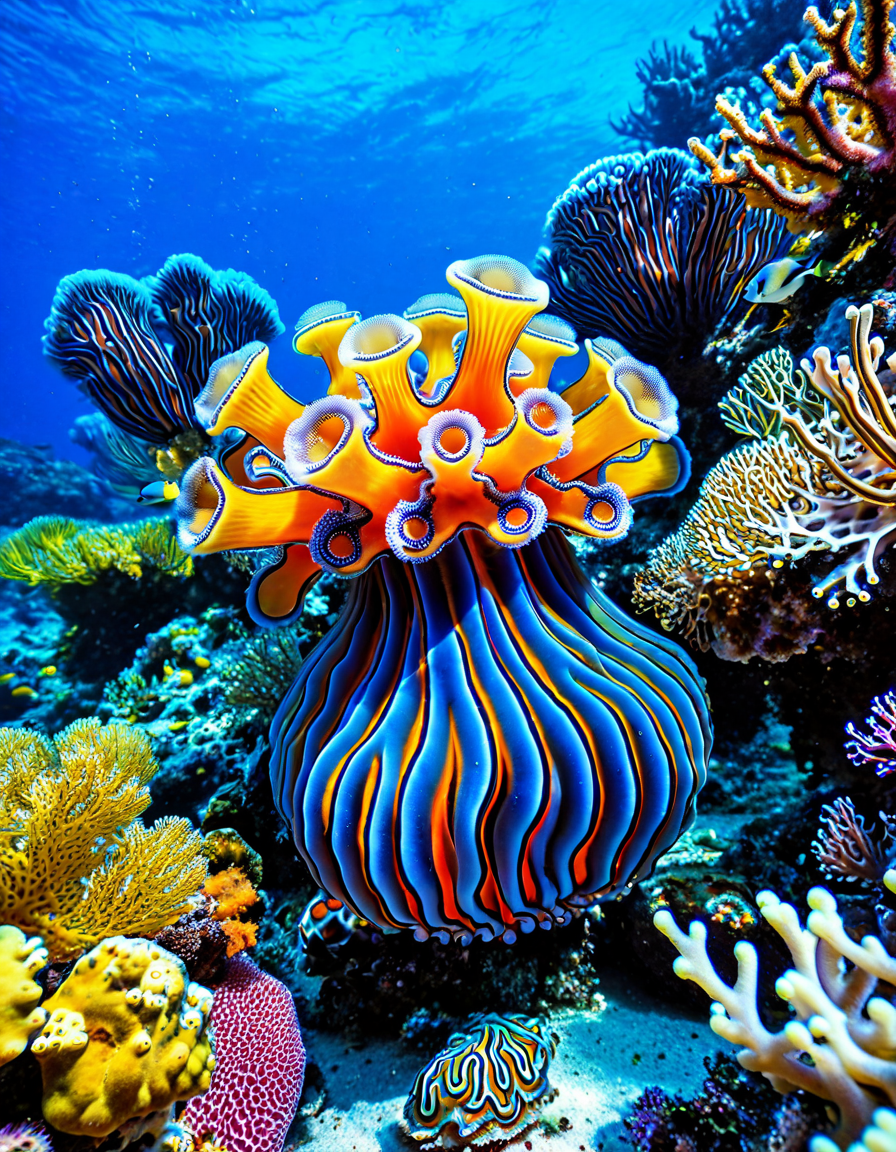
At first glance, sea squirts seem like mere blobs clinging to rocks or coral, but don’t let their appearance fool you! Biologically, sea squirts display a fascinating anatomy, complete with a siphon system that allows them to filter-feed with remarkable efficiency. Drawing in seawater, they extract tiny plankton and organic particles, hence contributing actively to nutrient cycling in the marine ecosystem. Who would’ve thought such odd-looking creatures could be unsung heroes of ocean health?
Their lifecycle is equally astonishing. The charming larvae of sea squirts swim freely and boast notochords, akin to the spinal cord in vertebrates. However, as these adventurous larvae settle down to transform into adult sea squirts, they sacrifice their vertebrate traits. This metamorphosis raises enticing questions for evolutionary biologists about how life forms transitioned from the simple to the complex. It’s as if the sea squirt is a tiny time capsule of evolutionary history, holding secrets to how vertebrates emerged from the depths of the sea.
But there’s more! Beyond their delightful biological quirks, sea squirts also play pivotal roles in maintaining the health of marine environments. By acting as bioindicators, they reflect the well-being of their surroundings. If sea squirts start to disappear, you might as well sound alarm bells because it signals troubling pollution levels or deteriorating water quality. They’re not just aquatic oddities; they’re bastions of ocean health.

Top 7 Fascinating Facts About Sea Squirts
Sea squirts are nature’s ultimate recyclers! Using their siphons, they filter-feed, cleaning water by absorbing plankton and organic debris. Talk about multitasking!
Some species can regenerate lost tissues—how very X-Men! Researchers are looking deep into this ability, hoping it might unlock new doors for human health, especially in regenerative medicine.
Here’s a natural alarm system: sea squirts react negatively to polluted waters, their populations dropping like a stone in a dumpster fire. They’re living canaries in the coal mine of ocean health!
Sea squirts host microorganisms, forming symbiotic relationships with algae and bacteria. These interactions illustrate the intricate web of life beneath the waves, creating partnerships that boost marine diversity.
Think sea squirts can’t protect themselves? Think again! They produce bioactive compounds that deter predators, sparking interest in pharmaceutical applications, especially in the fight against cancer.
Their larvae are rather special, possessing features akin to vertebrates. This captivating transition raises eyebrows, highlighting evolutionary links that tickle scientists’ fancy.
From textured coral reefs to sandy ocean floors, sea squirts can be found in various habitats. Their adaptability boasts an astonishing number of species, each contributing uniquely to their ecosystems.
Sea Squirts in Scientific Research
In the bustling world of scientific investigation, sea squirts are more than mere curiosities. They provide profound insights into genetics and evolution, particularly through studies focusing on Ciona intestinalis, a model species among sea squirt enthusiasts. Researchers hope that understanding its genome will illuminate significant aspects of chordate evolution—yes, we’re talking about the genetic blueprints that contributed to the rise of complex life forms.
Delve deeper, and you’ll uncover groundbreaking research exploring how these marine marvels directly contribute to our knowledge of developmental processes. This research could have implications as far-reaching as unlocking secrets surrounding human organ development. It’s as if sea squirts are whispering secrets of life into the ears of scientists, inviting further exploration into our own biological heritage.
As the world moves towards sustainable practices, the importance of sea squirts cannot be overstated. Protecting these organisms not only safeguards their unique evolutionary narrative but also ensures ecosystems remain balanced. Without them, we could lose significant threads in the intricate fabric of marine life.
Conservation Challenges Facing Sea Squirts
Despite their critical roles, sea squirt populations face ominous threats. Climate change, habitat loss, and the ever-present specter of marine pollution loom large. Rising ocean temperatures and acidification disrupt these delicate organisms, hampering their strange but necessary functions in marine ecosystems. Any marine park’s resident might just feel the sting of loss if these lovable little blobs are affected.
Invasive species add fuel to the fire, often outcompeting native sea squirt populations for resources. Organizations like the Ocean Conservancy are stepping up to combat these challenges. They’re working diligently to develop policies that aim to protect these vibrant creatures and their habitats, paving the way for future generations to enjoy the wonders of the ocean.
We can’t stress enough the importance of individual action, either. It’s a collective responsibility to advocate for marine conservation. Participate in beach clean-ups, support sustainable seafood practices, or simply spread awareness about the plight of our aquatic friends. Saving sea squirts might feel small, but it’s steps like these that make a big splash!
The Cultural Significance of Sea Squirts
Beyond their scientific allure, sea squirts have made colorful impressions in the realms of art and culture. Their vibrant colors and peculiar shapes inspire artists and designers alike, appearing in everything from home decor to the latest runway trends. Much like the unexpected fierceness seen in punk fashion, sea squirts embody an eclectic style that captures the imagination.
Educational campaigns are also utilizing the charm of sea squirts to kindle interest in marine life and foster connections between humans and the ocean. By promoting awareness around these lesser-known creatures, communities globally can deepen their appreciation and advocacy for ocean conservation.
Whether as motifs in fashion or as symbols in marine conservation campaigns, sea squirts remind us of the intricate connections between humanity and nature. They reinforce that our beautiful oceans deserve protection, much like the avant-garde designs we celebrate in our fashion-forward communities.
Ultimately, sea squirts emerge as marvels of the ocean, rich in biological significance and ecological importance. Their mysteries contribute to a deeper understanding of marine life, evolution, and the interconnectedness of ecosystems. By unraveling the marvels these creatures hold, we commit to protecting the wonders of our oceans for generations to come. So next time you hear of a sea squirt, remember it’s not just a creature; it’s part of a larger narrative about resilience, beauty, and the urgent need for conservation in our ever-changing world.
Sea Squirt Surprises: Fun Facts and Trivia
Life at Sea: The Sea Squirt’s Wild World
Ever heard of a sea squirt? These fascinating creatures might seem simple, but boy, do they pack a punch in the ocean’s ecosystem! Surprisingly, sea squirts are not related to squids, despite the similar name. Instead, they belong to a group called tunicates, which makes them distant relatives of humans. Yes, you read that right! They share a common ancestor with mammals, and just like a departure from when the mangrove snapper swims through coastal waters, sea squirts thrive in various environments, from rocky shores to deep-sea habitats.
Another fun fact? Sea squirts can filter an astonishing amount of water—up to 2,000 liters a day! This filtration process helps keep the ocean clean, just like a mini-water treatment plant on a grand scale. Because of this, they provide a crucial service within marine communities. Wouldn’t it be remarkable if our environment had something similar to the benefits found on the playa bowls menu—healthy, refreshing, and environmentally friendly?
Adaptations and Mysteries
Speaking of surprises, sea squirts have an interesting life cycle. They start as mobile larvae, swimming freely until they settle down. After that, they attach themselves to hard surfaces, metamorphosing into their adult forms. This transformation is quite the change—from a free-roaming larva to a stationary adult! It’s as dramatic as watching Charlie Cox movies and TV shows; one minute you’re in action, and the next, you’re rooted in place.
Not only that, but sea squirts can also produce various substances that scientists are studying for potential medicinal uses. Researchers are eager to unlock the mysteries of these compounds, hoping they might lead to breakthroughs in medicines mimicking how the fat pig conveys its essence—it’s all about finding the right components! In their quest for answers, scientists are constantly reminded that every creature, including our little friend the sea squirt, contributes to the intricate dance of marine life.
So next time you find yourself by the ocean—or perhaps after a fun day of Fourth of July baseball—take a moment to appreciate these weird and wonderful beings. There’s so much more beneath those waves than meets the eye!